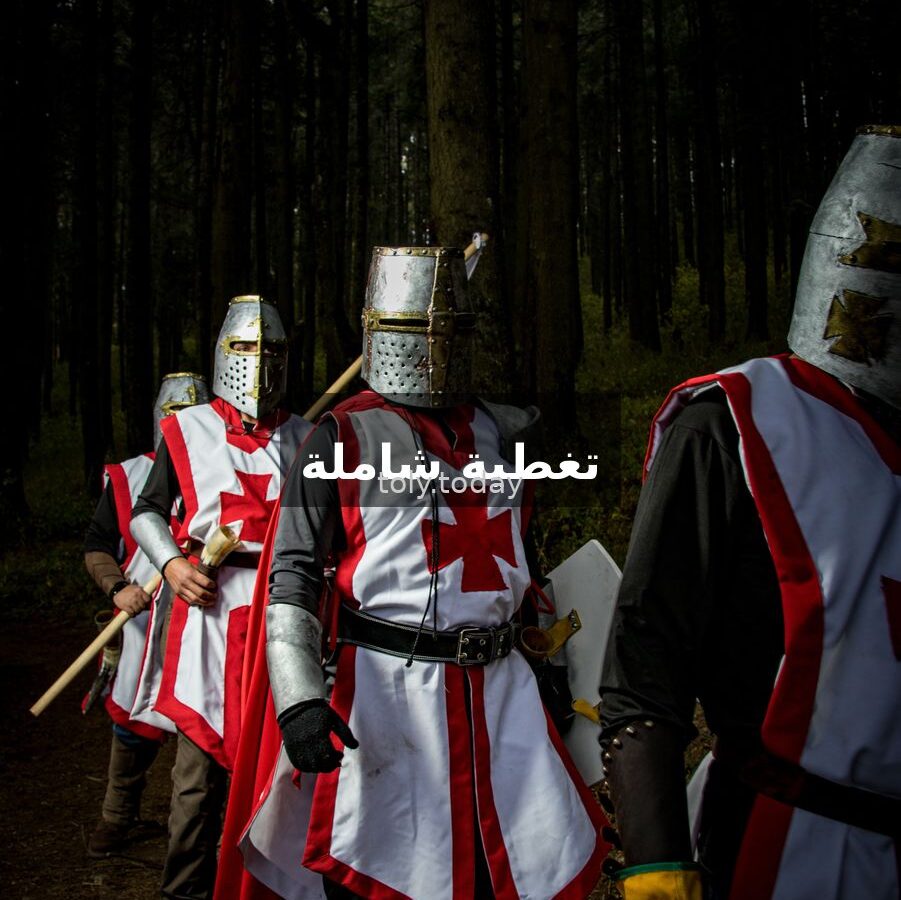
616 years ago, on July 15, 1410, one of the largest battles in European medieval history took place. The Battle of Grunwald (or the First Battle of Tannenberg) — where two massive armies clashed in an open field between the villages of Grunwald and Tannenberg in what is now northern Poland.
Background: A Struggle for Dominance
The Polish-Lithuanian state, ruled by King Władysław II Jagiełło, faced an existential threat from the Teutonic Knights — the German crusader military order that controlled the region of Prussia. The Teutonic Knights, led by Grand Master Ulrich von Jungingen, had built the strongest military state in northeastern Europe, and their ambition was to expand at the expense of Poland and Lithuania.
The spark for war came when the people of Samogitia (in present-day Lithuania) rebelled against Teutonic rule, and were joined by the Poles in a military alliance. By the summer of 1410, both armies were preparing for the decisive confrontation.
Two Giant Armies
What makes the Battle of Grunwald remarkable is the sheer size of the forces involved. The Polish-Lithuanian army numbered around 39,000 fighters — including heavily armored Polish knights, Lithuanian warriors, and even Tatar horsemen led by Prince Jalal ad-Din. In contrast, the Teutonic Knights fielded about 27,000 troops, mostly trained knights and mercenary infantry from across Europe.
The Battle Unfolds: A Deception That Changed History
The battle began in the midday of July 15. The Lithuanians attacked fiercely but withdrew quickly in a move that stunned everyone — some consider it a planned tactical retreat, others a real collapse. The Teutonic Knights charged after them, believing victory was theirs.
But the reality was different. The Polish flank held firm against Teutonic assaults. In a decisive moment, King Jagiełło launched a counterattack, while the Lithuanians returned to the battlefield and struck the knights from behind. Grand Master Ulrich von Jungingen was killed on the field, and the Teutonic army collapsed entirely.
The Aftermath: A Historical Massacre
The Teutonic defeat was catastrophic. They lost between 8,000 and 15,000 fighters, along with most of their leadership — about 200–400 knights out of the 250–300 who participated. The losses on the Polish-Lithuanian side were lighter but still heavy.
Consequences: The End of a Military Empire
The Battle of Grunwald did not end the Teutonic Order’s existence, but it shattered their military power forever. The Teutonic Knights’ status as a major power in the region declined, while Poland and Lithuania rose as strong states. This battle became the foundation upon which Poland built its national pride for centuries.
Today, a massive monument stands at the battlefield in Poland, and a historical festival is held every mid-July to commemorate the battle with thousands of people dressed in medieval attire. In Poland and Lithuania, the Battle of Grunwald remains a symbol of unity and courage in the face of aggression.
Frequently Asked Questions About the Battle of Grunwald
Why is the Battle of Grunwald named as such?
It is named after the nearby village of Grunwald (Grünwald in German), which means “Green Forest.” It is also known as the First Battle of Tannenberg.
How many soldiers fought in the Battle of Grunwald?
Estimates suggest the Polish-Lithuanian army had around 39,000 fighters, while the Teutonic Knights fielded about 27,000 — a total of roughly 66,000 soldiers, an enormous number for medieval battles.
Who led the Polish side in the battle?
King Władysław II Jagiełło, King of Poland and Grand Duke of Lithuania, personally commanded the Polish-Lithuanian forces. He was supported by his cousin Vytautas the Great, who led the Lithuanian troops.
Is this the same battle as the Tannenberg of World War I?
No. The First Battle of Tannenberg (1410) is the Battle of Grunwald. The Second Battle of Tannenberg took place in August 1914 during World War I between Germany and Russia, but the Germans named it Tannenberg for propaganda purposes to evoke the memory of this earlier victory.
Has the alleged Teutonic been.
Is it true that the Teutonic Knights used cannons in battle?
Yes, some sources indicate that the Teutonic Knights used primitive cannons during the battle, but they did not significantly affect the outcome due to the difficulty of using them in combat conditions.