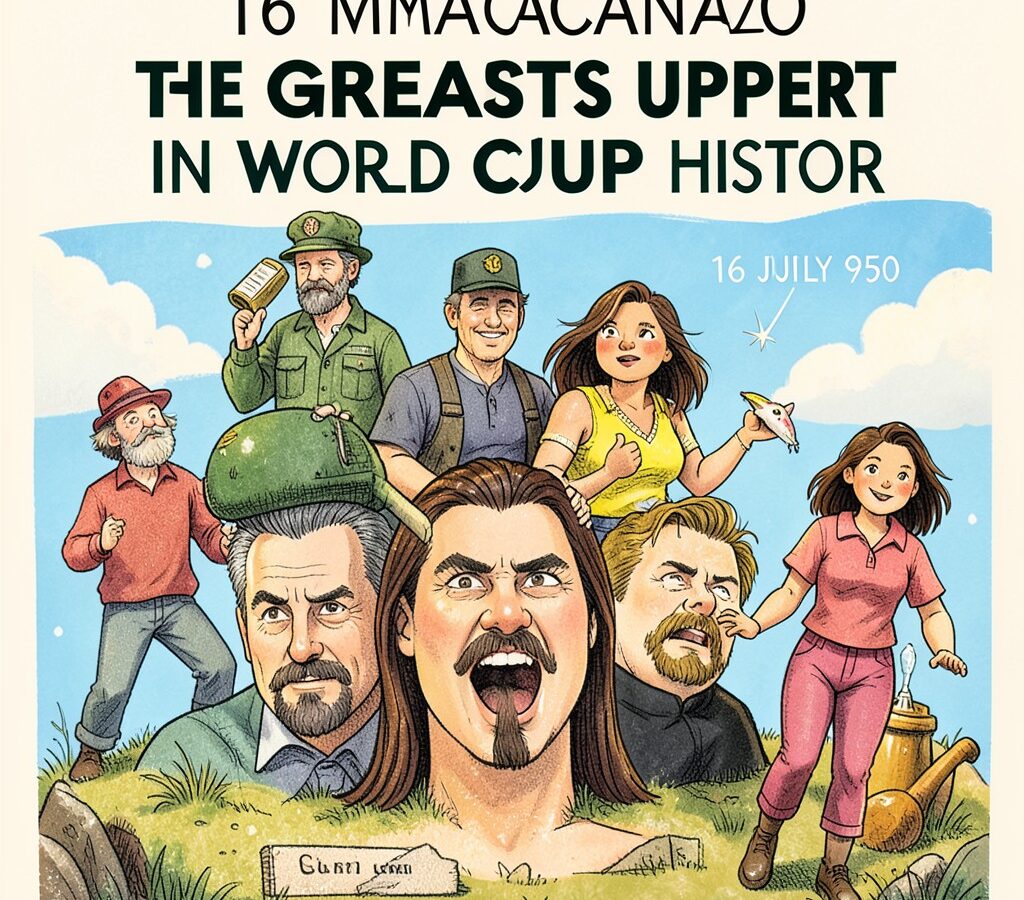
On this day — July 16, 1950 — one of the greatest upsets in world sports history was recorded. At the iconic Maracanã Stadium in Rio de Janeiro, Brazil was on the verge of winning its first-ever FIFA World Cup in front of over 200,000 spectators. What transpired instead changed Brazilian football forever and gave the world an unforgettable story known as the “Maracanaço” — the crushing blow from the Maracanã.
Background: Everything was ready for a Brazilian wedding
Brazil hosted the 1950 World Cup, and the Brazilian national team was in peak form. They reached the final match (which was actually a final round-robin game) needing only a draw to be crowned champions. Brazil had demolished Sweden 7–1 and Spain 6–1 in earlier rounds, and everyone — from the press to the government to the fans — was confident of victory.
The Brazilian government printed newspapers in advance announcing the team as world champions. A special anthem was composed for the occasion. Crowds thronged the streets of Rio chanting, “Brazil will win the World Cup.”
The Match: A Shock No One Expected
The game kicked off in front of a record crowd — estimates range from 174,000 to over 210,000 inside the Maracanã. Brazil dominated the first half but failed to score.
In the second half, after just 47 minutes, Friaca scored Brazil’s first goal. The stadium erupted in celebration — everyone believed things were going as planned. But what followed was a devastating shock.
Nineteen minutes later, Juan Alberto Schiaffino equalized for Uruguay. A hush began to fall over the stands. Then, in the 79th minute, Alcides Ghiggia received the ball on the right flank, cut inside, and unleashed a powerful shot past the Brazilian goalkeeper. Uruguay scored again. Silence fell over the Maracanã.
The match ended 2–1 in favor of Uruguay. Brazilian fans froze in their seats. People wept in the stands. Officials in the VIP section wept. Brazil could not believe what had happened.
The Impact of the Maracanaço: A Shock That Changed a Nation
The Maracanaço was not just a football loss — it was a deep psychological and social event in Brazilian history. The country entered a state of national mourning. Entire books were written analyzing the trauma of that defeat on the Brazilian psyche. Some called it a national catastrophe.
Yet, that loss became a turning point. Brazil changed its national team shirt from white to the now-famous yellow — a design by Aldyr Garcia Schlee inspired by the colors of the Brazilian flag. And in 1958, just eight years after the Maracanaço, Brazil won its first World Cup in Sweden, beginning the greatest era in football history.
As for Uruguay, that victory remains their greatest footballing achievement. Alcides Ghiggia, scorer of the second goal, famously said: “Only three people have silenced the Maracanã: Frank Sinatra, the Pope, and me.”
Maracanã 2014: When the Ghost Returned
Sixty-four years later, on July 8, 2014, the memory of the Maracanaço returned to haunt Brazil once more. In the same Maracanã, during the World Cup hosted by Brazil, the national team suffered a 7–1 defeat to Germany in the semifinals — a match dubbed the “Mineiraço.” History repeated itself in a different form.
Frequently Asked Questions About the Maracanaço
Why is the Brazil vs. Uruguay match considered a final if it wasn’t a traditional final?
The 1950 World Cup format was different. There was no single final match. Instead, a final round-robin stage featured four teams (Brazil, Uruguay, Sweden, Spain). The last match between Brazil and Uruguay decided the champion.
How many people attended the match?
The official attendance was 173,850, but unofficial estimates go beyond 210,000 — the largest crowd in World Cup history.
When did Brazil win its first World Cup after the Maracanaço?
Eight years later, in 1958 in Sweden, led by a 17-year-old Pelé.
Why did Brazil change its kit color?
After the
The Maracanã, the Maracanã, the Brazilian Football Association decided to change the white jersey that was associated with their losses. The new yellow jersey was designed with the colors of the Brazilian flag and became a global symbol of Brazilian football.