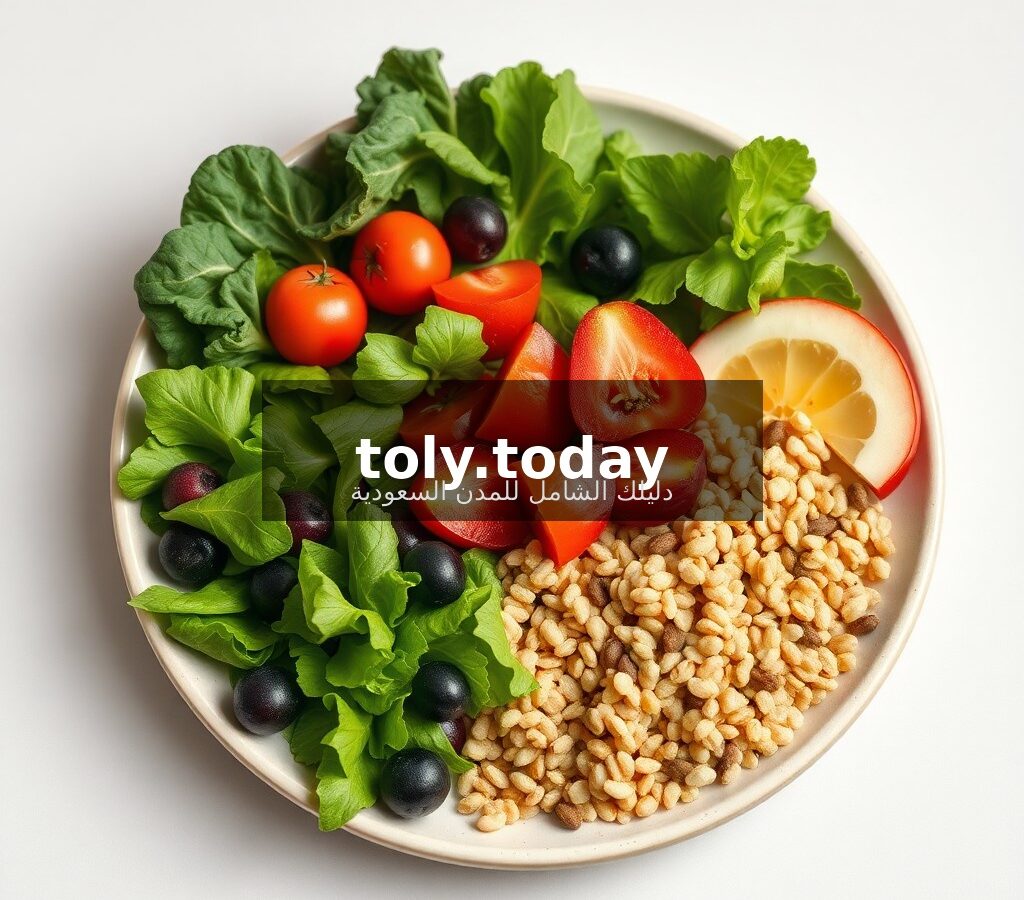
We all hear the term “balanced diet,” but what does it really mean? Simply put, it means eating from all food groups in appropriate quantities so your body gets the energy, vitamins, and minerals it needs. In this article, we’ll explain what a balanced diet is, how to start, and its benefits for your health.
What does a balanced diet mean?
A balanced diet means eating meals that contain the nutrients your body needs daily. These nutrients include carbohydrates (energy source), protein (muscle building), healthy fats, vitamins, minerals, and fiber. You don’t have to deprive yourself of anything—balance and moderation are key.
Components of the ideal healthy plate
Nutrition experts divide a healthy plate into 4 main sections:
- Half the plate — colorful vegetables and fruits (leafy greens, tomatoes, carrots, broccoli)
- One-quarter of the plate — protein (chicken, fish, red meat, legumes)
- One-quarter of the plate — carbohydrates (rice, whole wheat bread, potatoes, pasta)
- On the side — healthy fats (olive oil, avocado, nuts)
7 tips for applying a balanced diet
- Don’t skip breakfast — it kickstarts your day and gives you energy.
- Vary your choices — try a new vegetable or fruit color every day.
- Reduce sugar and soda — swap them for natural juices or water.
- Choose whole grains — whole wheat bread, oats, and quinoa are better than refined white flour.
- Drink enough fluids — water is essential for all body functions.
- Cut back on salt — use herbs and spices for flavor instead of salt.
- Plan your meals — planning prevents random eating and fast food.
Difference between healthy eating and a balanced diet
| Healthy eating | Balanced diet |
|---|---|
| Focuses on specific foods only | Includes all food groups |
| Often restricts carbs or fats | Includes carbs and fats in proper amounts |
| Hard to maintain long-term | Sustainable lifestyle |
| Often aims for weight loss | Aims for overall health and lasting energy |