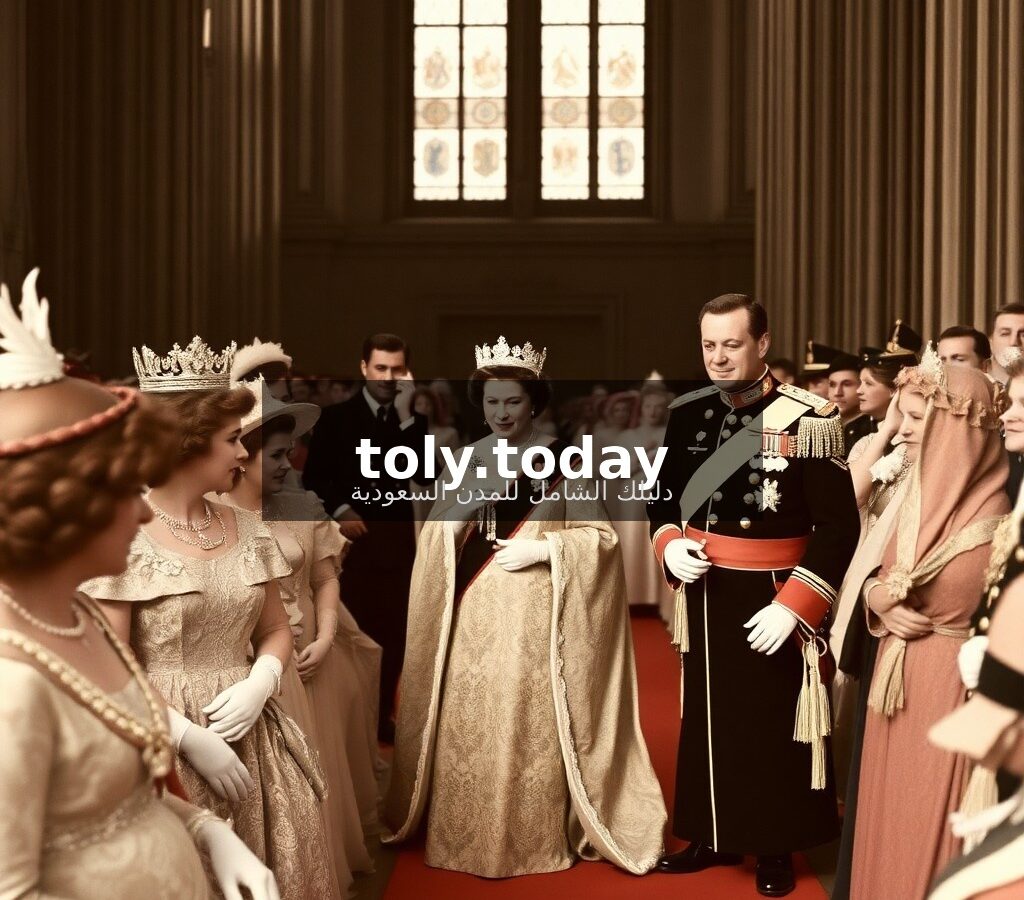
On this day in 1953, the world witnessed a historic and unique event in the heart of London. On June 2 of that year, Queen Elizabeth II was officially crowned Queen of the United Kingdom and the Commonwealth realms at Westminster Abbey, becoming the sixth British monarch to ascend the throne and one of the longest-reigning monarchs in British history.
A Coronation Like No Other
The coronation followed the death of her father, King George VI, in February 1952, when she ascended the throne at just 21 years old. However, the coronation was not merely symbolic; it was a momentous occasion witnessed by the entire world. Around three million British citizens flooded the streets of the capital to witness the festive atmosphere, while approximately 27 million people in Britain alone watched the coronation on television—a staggering number for the time.
The event was not confined to Britain alone; it was broadcast globally and watched by millions of citizens around the world, particularly in Commonwealth countries. The ceremony included around 8,000 guests, including heads of state and representatives from 129 countries, making it one of the largest gatherings in British coronation history at the time.
Embracing a New Era
Politically, the coronation came at a critical time during the Cold War. Britain was still recovering from the effects of World War II and needed a national symbol to boost morale. The young queen, with her poised presence and remarkable composure, instilled hope in the hearts of the British people and gave them a sense of stability and the will to rebuild.
Elizabeth II was not merely a queen by tradition; she proved herself to be a sovereign who served her people wholeheartedly. During the coronation, she took a public oath, pledging her commitment to the British constitution, the protection of the law, and the Church of England, vowing to serve her people as long as she lived.
A Legacy Spanning Seventy Years
Over the years, Queen Elizabeth II became the longest-reigning British monarch, ruling for more than 70 years. Throughout her decades on the throne, the world witnessed immense transformations: from the Cold War to the fall of the Berlin Wall, from the dawn of space exploration to the internet age, and from numerous independence movements in Africa and Asia to the shaping of the modern world.
Queen Elizabeth navigated these upheavals with remarkable calm and resilience, maintaining the stability of the royal family amid political and social storms. Her skill in times of crisis and her ability to remain steadfast and adaptable made her one of the most respected and symbolic figures in the modern world. Her reverence was such that she consistently ranked first in global opinion polls for many years.
Conclusion
June 2, 1953, was not just a coronation day; it was the spark that ignited a seven-decade reign during which the world underwent radical changes. Through her humble legacy and powerful presence, Elizabeth II transformed a youthful coronation moment into one of the most significant chapters in both British and world history. More than 70 years later, this memory remains an iconic symbol of the 20th century worthy of reflection.