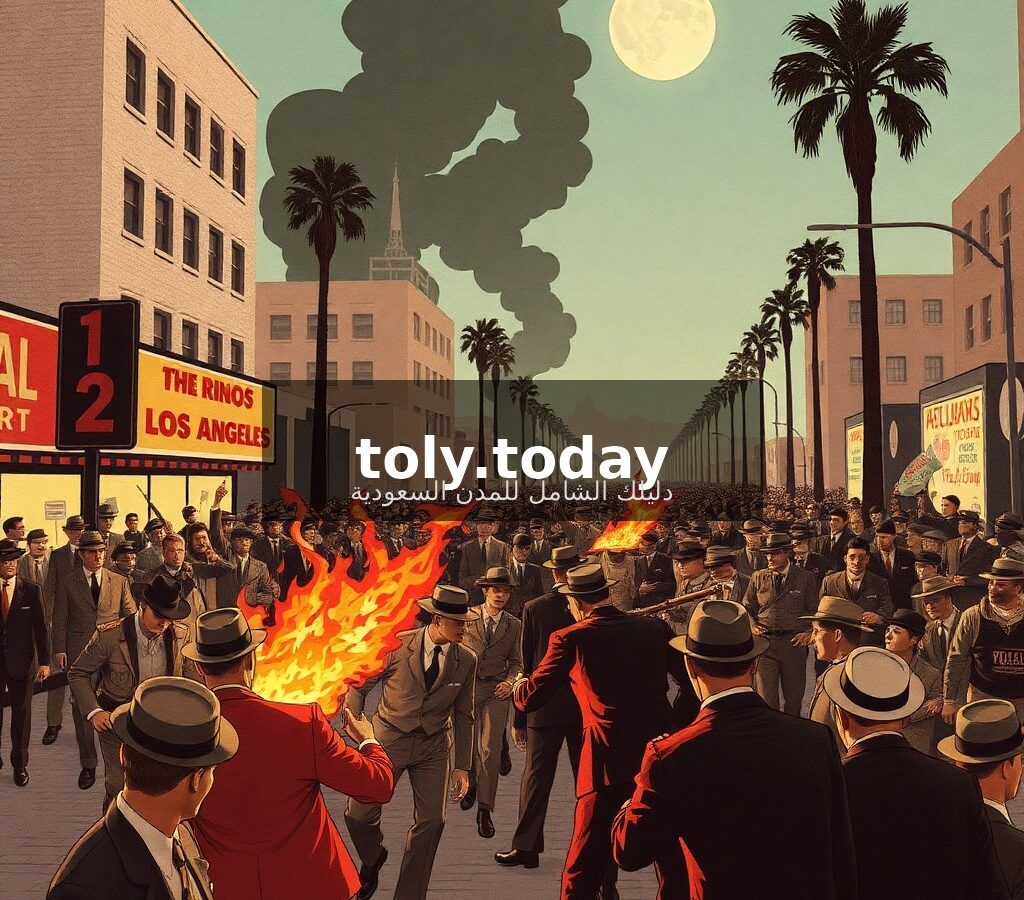
On June 3, 1943, the “Zoot Suit Riots” began in the American city of Los Angeles when a group of retired white sailors from the U.S. Navy’s Youth Squadron were attacked by Mexican-American youths wearing the distinctive “zoot suit.” This small spark ignited a wave of violence that lasted for weeks and revealed deep wounds in the fabric of American society.
The Outbreak of Rage: From Harassment to Street War
The clothing was not the only issue; it was a symbol of Mexican-American youth culture that suffered from marginalization and discrimination. The clashes began with small groups of angry sailors attacking youths wearing “zoot suits” on the streets of Los Angeles, quickly escalating into a widespread phenomenon involving thousands of participants on both sides.
These events coincided with a state of deep-seated racial tension in American society. Mexican immigration was increasing, and with it grew fears and racist stereotypes against immigrants. Added to this were the economic pressures of World War II, which forced many into its sectors, sparking jealousy and concern over competition from Mexicans for job opportunities.
The Airwaves: The Role of Media Outlets
The media played a pivotal role in escalating the situation. Instead of providing objective coverage, local newspapers reinforced racist stereotypes against Mexicans and highlighted their attire as a sign of rebellion and defiance. Some newspapers promoted the idea that “zoot suit” youths posed a threat to national security, exploiting the war as a cover to mislead public opinion.
This media approach fueled a spirit of revenge among the sailors and other citizens who joined the waves of attacks. Under these prevailing conditions, the streets became theaters of violence, where vulnerable and defenseless youths were easy targets for mob attacks.
Halting the Beast: Acts of Violence
The “Zoot Suit Riots” continued for more than a month, with their effects spreading to other cities such as San Diego and Chicago. According to reports, more than 150 people were targeted in the attacks, while the violence did not result in many deaths, the psychological and social damage was deep and lasting.
Local police and authorities were either unable or unwilling to prevent the violence, and in some cases, documented collaboration between police officers and the attackers was reported. This alleged complicity sparked widespread anger in minority communities and became a historic moment in the demand for equality.
Legacy and Historical Lessons
The “Zoot Suit” scandal led to fundamental changes in local policies and a re-examination of the relationship between minorities and the American establishment. It opened eyes to the reality of deep-seated racism in a society that presents itself as a beacon of freedoms. The anti-racism campaigns that followed the protests led to new legislation to protect civil rights.
This event remains a testament to how economic and social factors can erupt into acts of violence when fueled by hate speech. It also reminds us that clothing and cultural symbols can become tools of discrimination, and that true understanding and empathy are the paths to bridging social divides.
In a century since these events, we find that the roots of racism and discrimination still gnaw at the fabric of societies, but the struggles of
Mexican-Americans continue to thrive and grow, pushing towards a more just and equal future for all.