In the heart of Medina, just steps from the sacred Prophet’s Mosque, stands Al-Qiblatain Mosque — a witness to one of the greatest moments in Islamic history. This mosque, where the revelation brought a change of the qibla from Al-Aqsa Mosque in Jerusalem to the Sacred Mosque in Mecca, holds an immeasurable religious memory within its walls. It is not an ordinary mosque, but a unique Islamic landmark that tells the story of the transformation of the prayer direction, which united Muslims under a single qibla.
Al-Qiblatain Mosque is one of the most prominent religious destinations in Medina, visited by people from around the world not only to pray there but also to feel the greatness of that historical moment that changed the course of worship in Islam. In this article, we take you on a comprehensive tour inside this blessed landmark.
Historical Insight — When the Qibla Changed
The history of Al-Qiblatain Mosque dates back to the second year of the Hijra, specifically in the month of Shawwal, when Prophet Muhammad ﷺ and his companions were praying toward Al-Aqsa Mosque in Jerusalem. On one of the noon prayer days, as the Prophet ﷺ was praying with his companions, the revelation came from Jibril with God’s command to change the qibla to the Kaaba in Mecca.
The established narration states that the Prophet ﷺ had prayed two rak’ahs facing Jerusalem, then God commanded him to turn toward the Kaaba. He turned in the middle of the prayer, and his companions followed. From here came the name “Al-Qiblatain Mosque” — because it is the only mosque in Islam where Muslims performed a single prayer facing two different qiblas. The noble verse was revealed: “Indeed, We see turning your face toward the heaven, so We will surely turn you to a qibla that pleases you. So turn your face toward the Sacred Mosque. And wherever you are, turn your faces toward it.” (Surah Al-Baqarah: 144).
The mosque was built during the caliphate of Umar ibn Abdulaziz in the first century of the Hijra, and underwent several renovations throughout the ages. The most famous renovation was during the era of King Fahd ibn Abdulaziz in the late 20th century, when it was fully expanded and renewed while preserving its historical character.
Location and How to Reach It
Al-Qiblatain Mosque is located in the northwestern part of Medina, in the old Al-Bani Salama neighborhood (now known as Al-Qiblatain or Al-Anbariya neighborhood). The mosque is approximately 5 kilometers from the Prophet’s Mosque, about a 10-15 minute drive by car.
Ways to reach it:
- Private car: Take King Abdullah Road or Abu Bakr al-Siddiq Road toward Al-Anbariya neighborhood
- Taxi or Uber: The fare from the Sacred Mosque is approximately 15-25 SAR
- Buses: Public transport buses are available from downtown Medina
- The mosque is open to men and women throughout the day
You can also visit the mosque as part of guided city tours of Medina organized by licensed travel agencies.
Activities and Experiences at Al-Qiblatain Mosque
Prayer in the Two Qiblas Mosque
In the main prayer hall, you will find a distinctive floor marking indicating the spot where Prophet Muhammad ﷺ stood during the historic noon prayer. In this very corner, you can feel the magnitude of the moment when the Prophet ﷺ changed from one qibla to another — the first two rak’ahs faced Jerusalem, and the following two faced Mecca.
Strolling in the Outer Courtyard
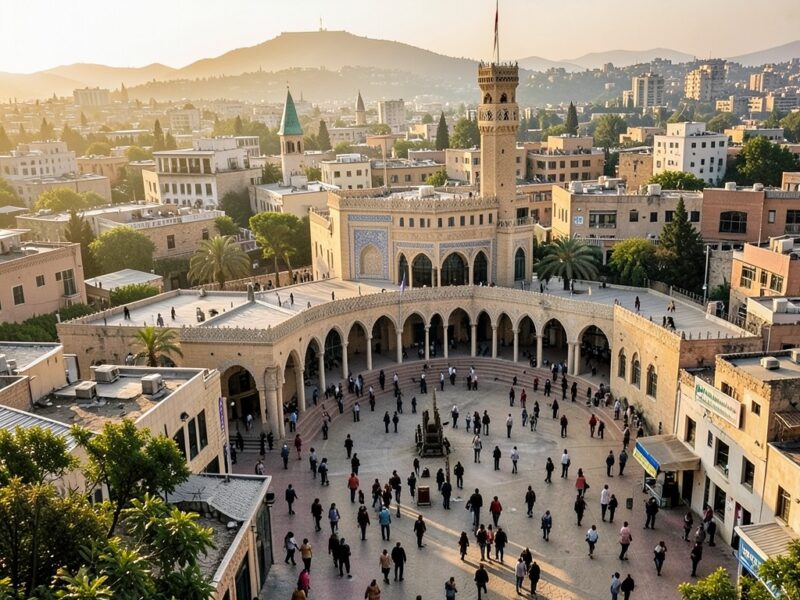
The spacious courtyard surrounding the mosque is equipped with green areas and water fountains. The scattered seating areas offer you a chance to relax and reflect in the peaceful atmosphere of Medina. It is an ideal place for families, especially in the evening hours.
Exploring the Unique Architectural Design
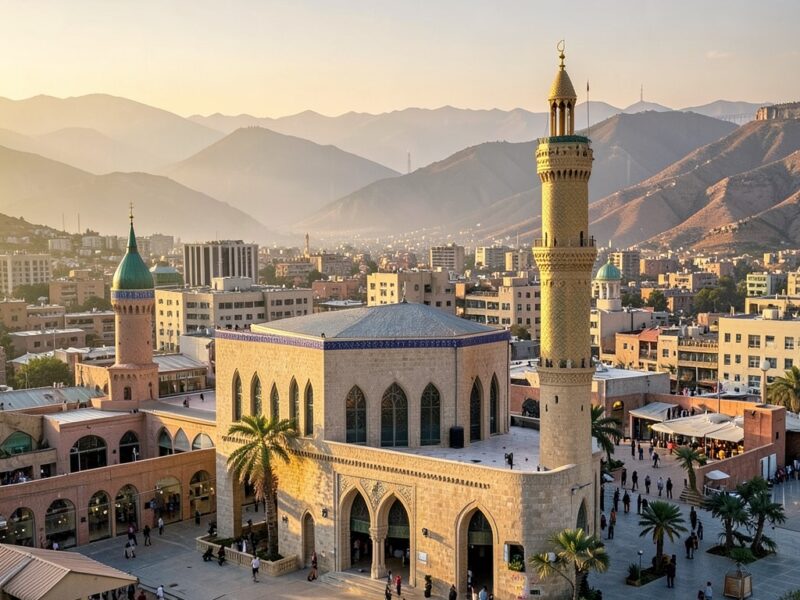
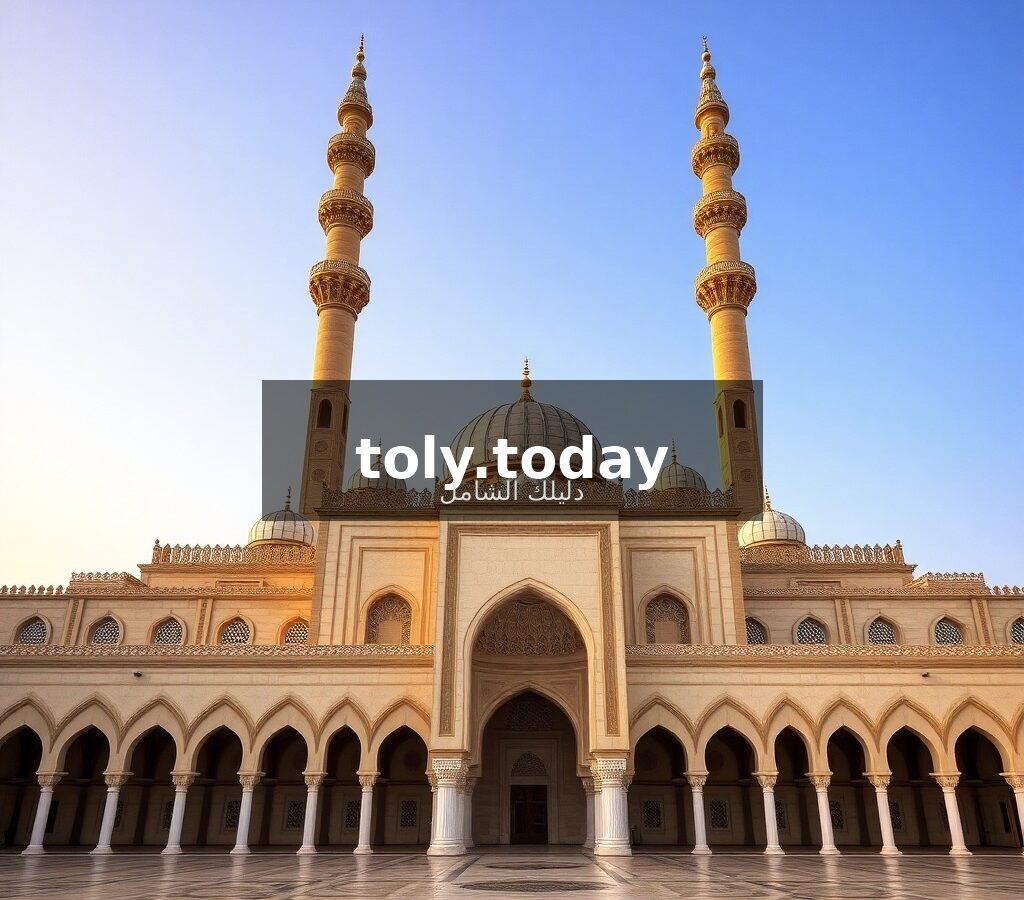
Al-Qiblatain Mosque is distinguished by its modern Islamic architectural design that combines simplicity and beauty. The twin minarets, standing 47 meters high, adorn the mosque’s facade, and the large white dome rises above the main prayer hall. The walls are made of light-colored stone, and the interior features spacious prayer areas with elegant calligraphy and soft lighting.
Photography and Documentation
The mosque and its surroundings are among the beautiful places for photography, especially in the golden light before sunset. You will find wonderful angles to capture the minarets and dome with the clear sky. It is preferred to photograph outside of prayer times out of respect for worshippers.
Practical Information — Opening Hours and Prices
Visiting Hours:
- The mosque is open 24 hours a day, every day of the week
- Best visiting times: from after the dawn prayer until noon, and from after Asr until sunset
- During Ramadan, the mosque sees high attendance, especially during the Tarawih and Tahajjud prayers
Ticket Prices:
Entry is completely free — all mosques in Saudi Arabia are open for prayer and visits without any fees. There are no entry fees or permits required.
Available Facilities:
- Restrooms and designated prayer areas for men and women
- A small library containing religious and historical books
- A parking area that can accommodate more than 100 cars
- Shaded areas in the outdoor square for sitting
- Close to the Haramain Railway Station (Haramain High-Speed Railway)
Important Tips for Visitors
To enjoy a visit to the Two Qiblas Mosque, here are 5 important tips:
- Visit in the early morning: The best time to visit is after the dawn prayer, when the atmosphere is quiet and there are fewer visitors, allowing you to reflect and photograph comfortably
- Dress modestly: As in all mosques, please wear clothing that covers the body while respecting the sanctity of the place
- Prepare spiritually: Read about the story of the change of the qibla before your visit to feel the greatness of the place — read Surah Al-Baqarah verses 142-150
- Combine with a visit to nearby landmarks: You can visit the Mosque of Quba (the first mosque in Islam) on the same trip, as it is only about 7 kilometers away
- Carry a small prayer rug: Although there are carpets inside the mosque, you may need a personal rug for sitting in the outdoor square or for photography
Frequently Asked Questions (FAQ)
Q: Is it true that there were actually two mihrabs in the mosque?
A: Yes, there were two mihrabs in the mosque — one facing Al-Aqsa Mosque and another facing the Kaaba. However, in the latest expansion, the two mihrabs were merged into one facing the Kaaba as a symbol of the unity of the qibla, while preserving an explanatory plaque that tells the story.
Q: How long does the visit take?
A: You can complete the visit in 30-45 minutes for prayer and touring. If you wish to sit in the outdoor square and take photos, allow one and a half to two hours.
Q: Is the visit available for women?
A: Absolutely! The mosque is open to both men and women around the clock. There is a separate, spacious, and comfortable prayer area for women with all necessary facilities.
Summary: The Two Qiblas Mosque is not just an ordinary mosque, but an Islamic landmark that tells the story of a great transformation in the nation’s history. Visiting it is a spiritual and historical experience not to be missed by anyone visiting Medina. Whether you are a pilgrim, an umrah performer, or a tourist, make this mosque a part of your trip — and you will leave with a beautiful story to share with your family and friends.