Do you suffer from heartburn or persistent abdominal pain? Helicobacter pylori (H. pylori) might be the cause. This tiny bacterium infects millions worldwide, and many are unaware they carry it. In this comprehensive guide, we explain everything you need to know about H. pylori in a simple and understandable way.
What is H. pylori?
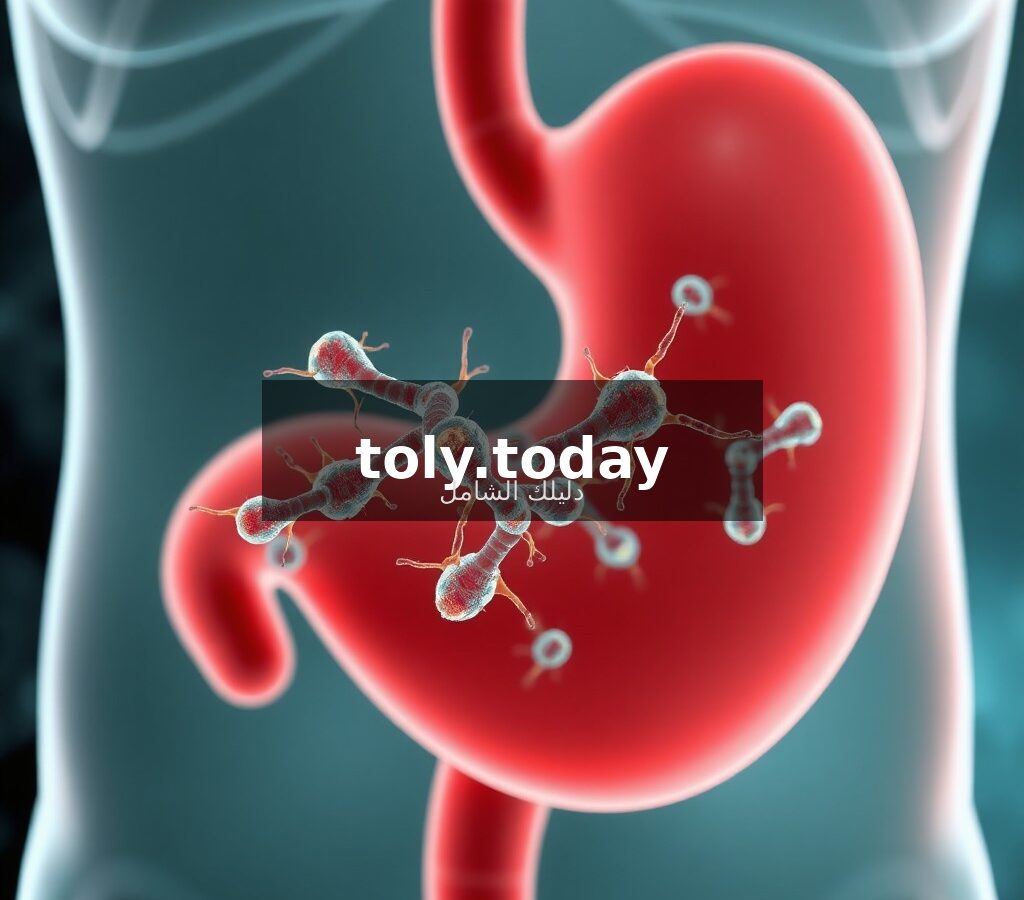
Helicobacter pylori (abbreviated as H. pylori) is a type of spiral-shaped bacteria that lives in the stomach lining. It was discovered by Australian scientists Barry Marshall and Robin Warren in 1982, and they won the Nobel Prize for proving that this bacterium causes stomach inflammation and ulcers.
What makes this bacterium unique is its ability to survive in the acidic environment of the stomach — something most other bacteria cannot do — thanks to an enzyme it secretes that neutralizes acid around it.
What are the symptoms of H. pylori?
The surprising fact is that more than half of those infected show no symptoms at all. However, when symptoms do appear, they include:
- Pain or burning in the stomach, especially when empty
- Persistent bloating and burping
- Nausea or loss of appetite
- Feeling full after eating only a small amount of food
- Bad breath (in some cases)
- General fatigue and weakness — may indicate anemia caused by internal bleeding
⚠️ Emergency symptoms requiring immediate medical attention: Black stools, vomiting blood, severe and sudden abdominal pain.
How is the infection transmitted?
Scientists are still studying the exact ways H. pylori is transmitted, but evidence suggests:
- Mouth-to-mouth: Through saliva or sharing eating utensils
- Contaminated food and drink: Especially in areas with poor hygiene
- Poor handwashing: After using the bathroom and before eating
- Contaminated water: From wells or unsterilized sources
The infection spreads more widely in developing countries and within the same household.
How is H. pylori diagnosed?
There are several methods to diagnose the infection, and the doctor will choose the most suitable one based on your condition:
| Test | Description | Accuracy |
|---|---|---|
| Urea breath test | You drink a special liquid and then breathe into a device that measures gas | Very high (best test) |
| Stool test | Detects the presence of bacteria in a stool sample | High |
| Endoscopy | A thin tube with a camera is inserted through the mouth into the stomach to take a sample | Most accurate — used in cases of complications |
| Blood test | Detects antibodies — but does not distinguish between current or past infection | Moderate |
What is the treatment for H. pylori?
Treatment for H. pylori relies on triple therapy for 10–14 days, which includes:
💡 Important: The full dose must be completed even if symptoms disappear. Stopping treatment early leads to antibiotic resistance and the return of the infection in a stronger form.
After 4 weeks of completing treatment, the doctor re-examines the breath or stool to ensure the complete elimination of bacteria.
Myth vs. Reality
- Myth: Stomach bacteria cause cancer in all infected individuals.
✅ Reality: A very small percentage (less than 1%) of those who do not receive treatment may develop stomach cancer after many years — but early treatment completely prevents this. - Myth: Stress and anxiety cause stomach bacteria.
✅ Reality: Stress worsens symptoms, but it does not cause the infection. The cause is the bacteria only. - Myth: Herbal mixtures treat stomach bacteria.
✅ Reality: There are no herbs that scientifically prove their ability to eliminate bacteria. The only effective treatment is antibiotics prescribed by a doctor.
Practical Tips for Prevention and Coexistence
- Wash your hands well: With water and soap for at least 20 seconds, especially before eating and after using the bathroom.
- Do not share personal utensils: Use your own plates and cups, especially if a family member is infected.
- Avoid smoking and painkillers: Smoking and non-steroidal anti-inflammatory drugs (such as ibuprofen) increase irritation of the stomach lining and worsen symptoms.
- Reduce spicy and fried foods: Spicy, fried foods, and caffeine increase stomach acidity and irritate the inflamed lining.
- Eat small, frequent meals: Instead of two or three large meals, distribute your food over 5-6 small meals to reduce pressure on the stomach.
Frequently Asked Questions
Is stomach bacteria contagious between spouses?
Yes, possible. Infection is transmitted through saliva, kissing, and sharing utensils. Therefore, it is recommended to treat all infected family members at the same time to avoid reinfection.
Can stomach bacteria be completely cured?
Yes, with a success rate of up to 90% with adherence to triple therapy for 10-14 days. However, some patients may need a second treatment cycle if the bacteria are resistant to the antibiotics used first.
How long do stomach bacteria symptoms last after starting treatment?
Symptoms start to improve gradually within 3-7 days of starting treatment. However, the disappearance of symptoms does not mean the elimination of bacteria — the full dose must be completed and then a confirmation test performed after 4 weeks.
📚 Sources: Mayo Clinic, WebMD, Saudi Ministry of Health (moh.gov.sa).