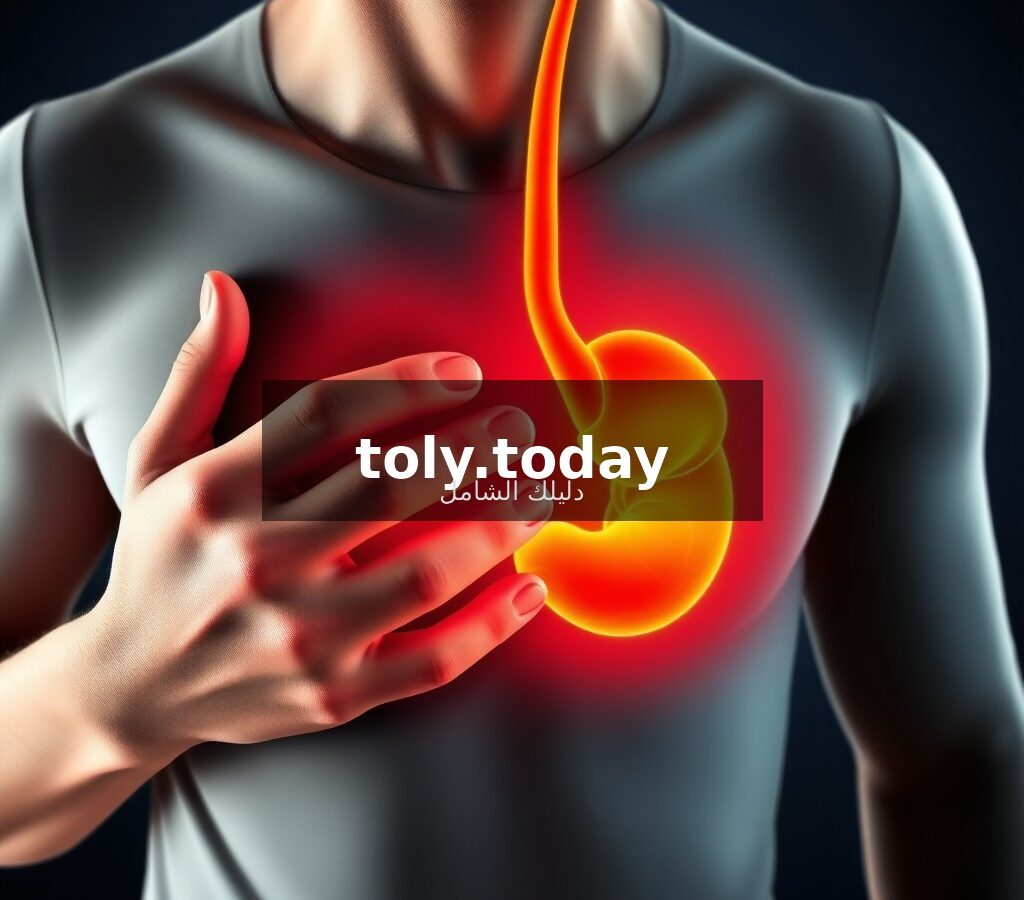
Do you feel a burning sensation in your chest after eating, especially when you lie down? Does a sour taste in your mouth bother you all day? You might have gastroesophageal reflux disease (GERD), a condition that affects millions of people worldwide. Many ignore it or confuse it with heart disease. In this article, we explain everything you need to know about GERD in a simple and useful way.
What exactly is GERD?
GERD is a chronic condition where stomach acids flow back into the esophagus (the tube connecting the mouth to the stomach). Normally, a muscular valve called the lower esophageal sphincter (LES) prevents acid reflux, but in GERD patients, this valve relaxes or weakens, allowing acid to rise into the esophagus and irritate it.
The difference between regular heartburn and GERD: Regular heartburn occurs occasionally after eating fatty foods, while GERD is chronic—happening twice or more a week and requiring regular treatment.
Common Causes
- Weakness in the esophageal sphincter—due to genetics or aging
- Obesity and excess weight—pressure on the abdomen pushes acid upward
- Pregnancy—hormonal changes and fetal pressure on the stomach
- Hiatal hernia—a part of the stomach protrudes into the chest
- Smoking—weakens the sphincter and increases acid secretion
- Certain foods and drinks—fried foods, citrus, caffeine, chocolate, mint
- Certain medications—painkillers (NSAIDs) and blood pressure drugs
Symptoms—When Should You Suspect GERD?
- Heartburn: A burning sensation in the middle of the chest, often after eating or when lying down
- Acid regurgitation: A sour or bitter taste in the mouth with food or liquid backing up
- Chest pain: May be mistaken for heart pain—Important: If chest pain is accompanied by shortness of breath or dizziness, go to the ER immediately
- Difficulty swallowing (Dysphagia): Feeling like something is stuck in your throat
- Chronic cough: Especially at night or after eating
- Hoarseness: Due to acid irritation of the vocal cords
- Chronic sore throat: Without a clear cause like a cold
Myth vs. Fact
Myth: GERD is just regular heartburn; antacids are enough.
Fact: GERD is a chronic condition requiring regular treatment. Antacids provide temporary relief but do not treat the root cause. Neglect can lead to esophageal ulcers or even Barrett’s esophagus (a change in esophageal lining cells that increases cancer risk).
Myth: Drinking milk immediately relieves heartburn.
Fact: Milk provides temporary relief but stimulates more acid secretion after an hour. It offers quick comfort followed by worse rebound.
5 Practical Tips for Managing GERD
The last meal should be at least three hours before sleep. Don’t eat and then go to sleep.When to See a Doctor?
- If symptoms persist for more than two weeks despite lifestyle changes
- If chest pain is severe or accompanied by shortness of breath
- If difficulty swallowing persists or worsens
- If you lose weight without cause
- If your stool is black or bloody — a sign of gastrointestinal bleeding
Available Medical Treatment
After diagnosis, the doctor may prescribe one of the following treatments based on the severity of the condition:
- Antacids: For mild cases — quickly relieve heartburn but have a short effect
- H2 blockers: Such as Famotidine — reduce acid secretion, useful for moderate symptoms
- Proton pump inhibitors (PPIs): Such as Omeprazole and Pantoprazole — stronger treatment, used for chronic cases, significantly prevents acid secretion
- Surgery: For severe cases or if medications don’t work — a procedure called Nissen fundoplication
References and Reliable Sources
For more accurate information, refer to:
- Saudi Ministry of Health — Chronic Diseases Guide: moh.gov.sa
- Mayo Clinic — GERD: mayoclinic.org/gerd
- WebMD — Heartburn/GERD: webmd.com/heartburn-gerd
- NHS UK — GORD: nhs.uk/heartburn
Frequently Asked Questions (FAQ)
Q: Does acid reflux cause cancer?
A: In very rare cases, chronic neglect can lead to Barrett’s esophagus, a cellular change that increases the risk of esophageal cancer. However, most people with reflux do not develop cancer. Most importantly: don’t ignore symptoms and treat them early.
Q: Can acid reflux be completely cured?
A: Acid reflux is a chronic condition — meaning it requires ongoing management rather than a one-time cure. Many people control symptoms completely through lifestyle changes and medications. Surgery can provide a longer-term solution but isn’t suitable for everyone.
Q: How do I tell the difference between heartburn and a heart attack?
A: Heartburn often occurs after eating, is relieved by antacids, and is accompanied by a sour taste. A heart attack causes pain that spreads to the shoulder or left jaw, along with shortness of breath and sweating. If in doubt, go to the emergency room immediately.
This article is for educational purposes only and does not replace consultation with a specialist doctor. If you have Symptoms of acid reflux, consult a doctor to determine the appropriate treatment for you.