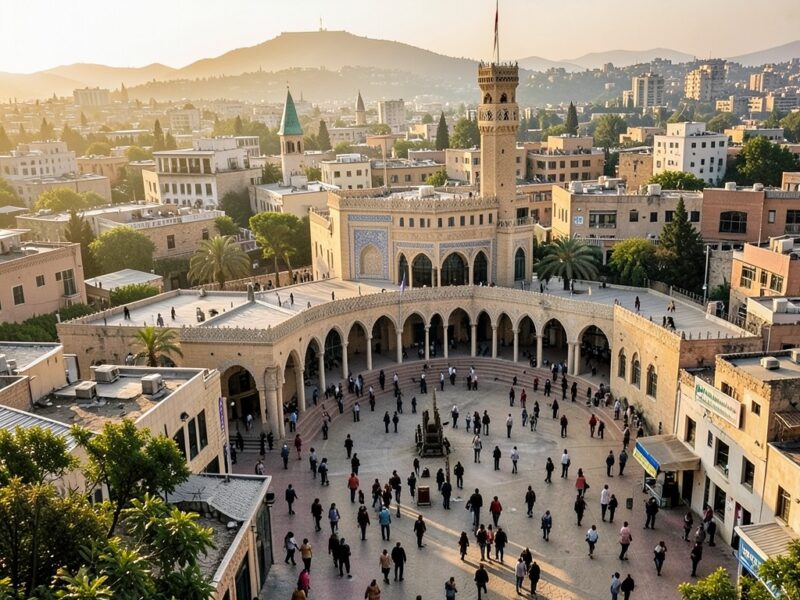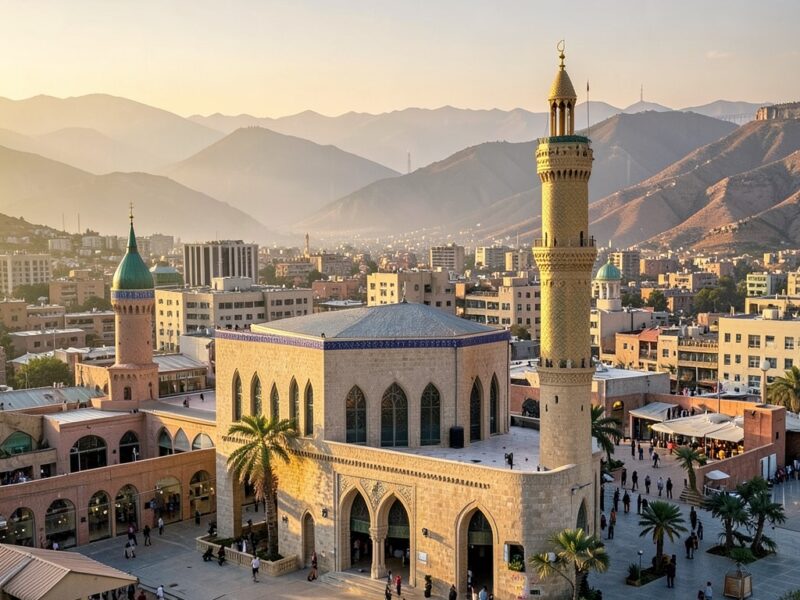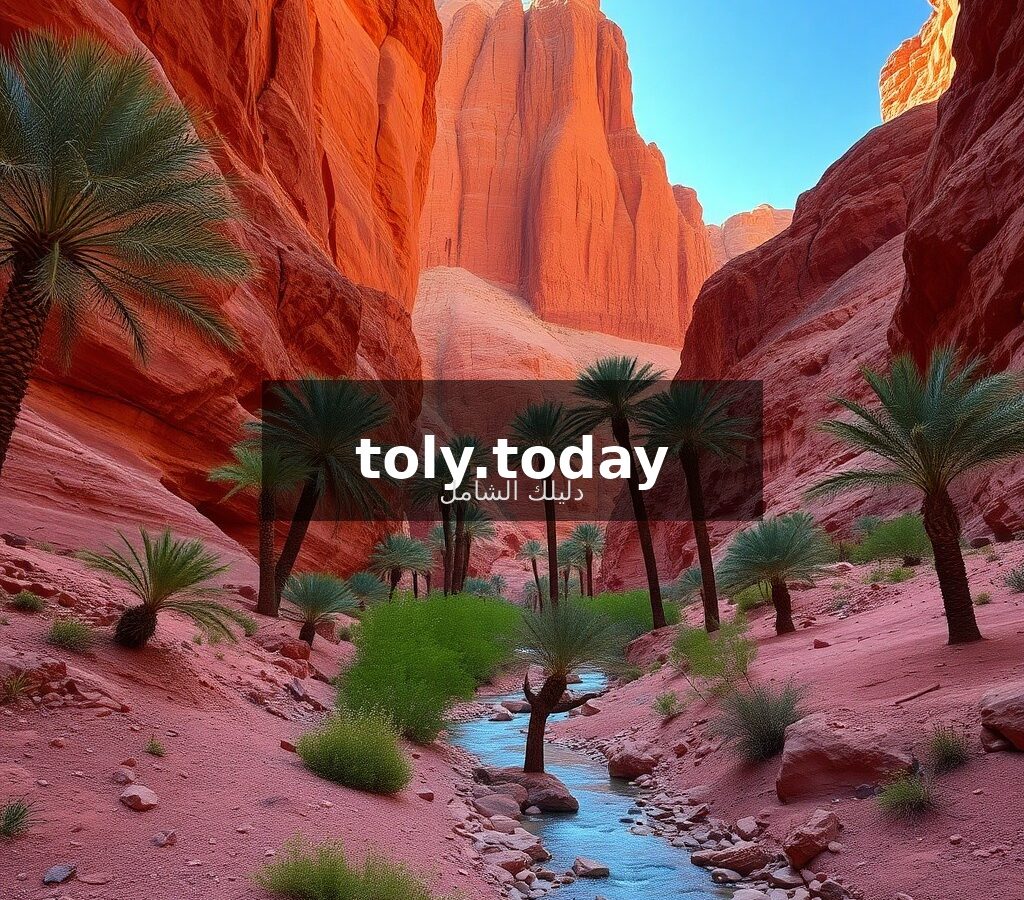
In the far northwest of Saudi Arabia, where towering mountains meet golden sands, one of the country’s most beautiful natural secrets hides: Wadi Al Disah. This enchanting valley in the Tabuk region takes you to a completely different world — a world of gigantic colored rocks, towering palm trees, and flowing water between rocks. A scene that resembles a painting carved by time over millions of years.
Wadi Al Disah has become a prominent tourist destination in recent years, attracting nature lovers and photographers from inside and outside the kingdom. What distinguishes this valley from others is its unique blend of stunning rock formations in red, golden, and orange colors, with green spaces of palm trees and trees that grow on the banks of seasonal streams. It’s a place where you feel like you’re walking inside an open natural museum.
A Historical Glimpse of Wadi Al Disah
Wadi Al Disah is not just an ordinary valley, but a historical site that has been inhabited by ancient civilizations for thousands of years. The name “Al Disah” comes from the dense plants that cover the valley’s ground. The Thamudic inscriptions and writings carved on the rocks indicate that this area has been inhabited since the Stone Age. The valley’s proximity to Mada’in Saleh and ancient caravan routes also made it an important stop on the trade route between the south and the north.
In modern times, Wadi Al Disah remained away from the spotlight for decades, until aerial photography campaigns and tourism awareness revealed its captivating beauty. Today, the valley is among the main destinations promoted by the Saudi Tourism Authority as part of Saudi Arabia’s Vision 2030 for sustainable tourism development.
Location and How to Access
Wadi Al Disah is located in the Tabuk region, specifically about 220 kilometers southwest of Tabuk city, and approximately 100 kilometers north of Al Wajh governorate on the Red Sea coast. It can be accessed via a paved highway that connects Tabuk to Al Wajh, then turning towards the valley through internal roads. The car ride takes about two and a half hours from Tabuk city, or three hours from Al Wajh city.
To reach the valley, it is recommended to use a four-wheel-drive vehicle, especially during the winter and spring seasons after rainfall. The area has dirt roads that require driving experience on rough terrain. It is also advised to use navigation apps like Google Maps, as the valley is registered on them under the name “Wadi Al Disah — Wadi Al Disah”.
Activities and Experiences in Wadi Al Disah
Walking among Rock Formations: The most beautiful part of visiting the valley is walking among the gigantic rocks that resemble artistic sculptures. Some rocks take strange shapes that resemble animals and towers, and you can spend hours discovering and photographing them. As the sun’s color changes, the colors of the rocks change, turning into breathtaking natural landscapes, especially at sunset.
Camping under the Stars: Wadi Al Disah is one of the best camping spots in Saudi Arabia. You can set up your tent among the palm trees and enjoy a quiet night under a starry sky, away from city lights. The area is known for its clear sky, suitable for stargazing and astrophotography. Make sure to take the necessary camping equipment, as the area does not have advanced tourist facilities.
Photography: If you are a professional or amateur photographer, you will find in Wadi Al Disah a subject that never runs out of photography opportunities. The colored rock formations, green palm trees, seasonal streams, and night sky all provide great opportunities. Don’t forget to photograph the valley
I arrive at sunrise where the golden, enchanting lights are.
Walking and Exploring: There are multiple trails within the valley suitable for different fitness levels. You can take a light walk among the trees or embark on a longer adventure to explore the side valleys. It is advisable to wear comfortable shoes suitable for rocky terrain.
Practical Information for Visitors
Best Time to Visit: The period from October to March is the best time to visit Wadi Disah. The weather is mild to cool during the day and cold at night. In spring (March-April), the green spaces increase and water flows in the valley. Avoid visiting in the summer months (June-August) when temperatures rise above 40 degrees Celsius.
Entry: The valley is open to all and there are currently no entry fees. Access is free for tourists and visitors. However, symbolic fees may be introduced in the future with the development of tourism services in the area.
Accommodation: There are no hotels or resorts inside the valley. The nearest city with hotels is Tabuk or Al Wajh. Camping is possible inside the valley with necessary precautions. It is advisable to contact local tourism offices for safety guidelines.
Important Tips for Visitors
- Plan Ahead: There are no gas stations or shops near the valley. Make sure to fill up your fuel tank and buy supplies and water before heading out.
- Bring Enough Water: Carry at least 4 liters of water per person, especially if you plan to walk or camp.
- Use a 4×4 Vehicle: The dirt roads inside the valley can be challenging for regular cars. A 4×4 vehicle is necessary, especially after rains.
- Respect the Environment: Keep the valley clean and do not leave any waste. The valley is a natural area and must be preserved for future generations.
- Consult a Local Guide: If this is your first visit, hiring a local guide will make your experience safer and more enjoyable.
Frequently Asked Questions (FAQ)
Q: Is Wadi Disah suitable for families and children?
A: Yes, the valley is suitable for families, but caution is advised with young children. The terrain can be rugged in some areas. It is best to camp in flat and clear areas.
Q: Is there mobile coverage in Wadi Disah?
A: Mobile network coverage is weak to non-existent in most parts of the valley. It is advisable to inform a relative of your travel plan before heading out and download maps for offline use.
Q: How long does the trip to explore Wadi Disah take?
A: The valley can be explored in one day, but it is best to allocate 2-3 days to fully enjoy camping, walking, and photography. Short day trips are sufficient to see the main attractions only.