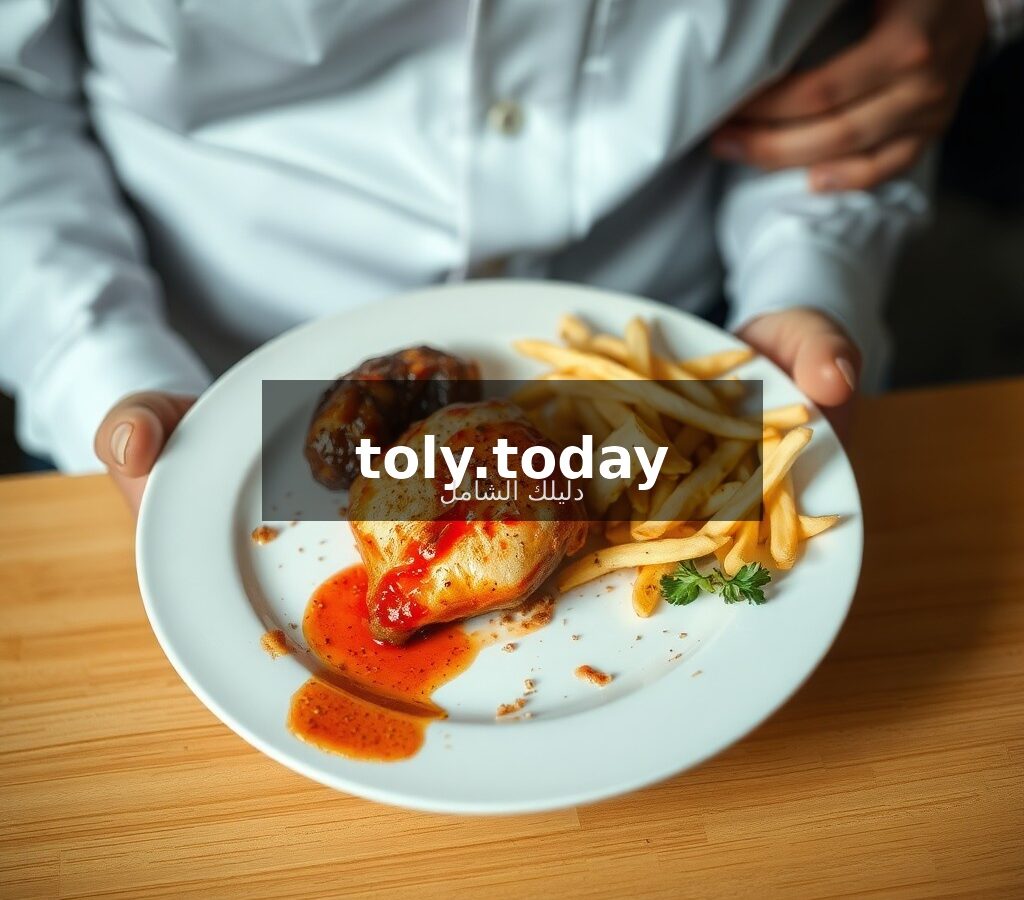
In the hot summer nights, with many banquets and feasts, cases of food poisoning increase significantly. A fun family evening can turn into a night in the hospital because of an uncertain meal. In this comprehensive guide, we provide you with everything you need to know about food poisoning — from early symptoms to home treatment methods and prevention.
What is Food Poisoning?
Food poisoning (Food Poisoning) is a disease that results from eating food or drinking contaminated with bacteria, viruses, parasites, or toxins. According to the Centers for Disease Control and Prevention (CDC), 1 in 6 Americans gets food poisoning every year. In Saudi Arabia, the incidence increases in the summer due to the high temperature that accelerates food spoilage.
Symptoms — When Do You Know You’re Infected?
Food poisoning symptoms usually appear within hours of eating contaminated food and can take days to appear, depending on the type of bacteria. The most common symptoms, according to the Mayo Clinic (Mayo Clinic):
- Upset stomach — feeling uncomfortable and nauseous
- Vomiting — may be severe and frequent
- Diarrhea — may be watery or bloody in severe cases
- Abdominal pain and cramps
- Fever (high temperature)
- Dehydration — severe thirst, dry mouth, decreased urination
- Headache and muscle aches
Causes — How Does Food Poisoning Occur?
The most common causes of food poisoning, according to the Mayo Clinic and the Centers for Disease Control and Prevention:
- Salmonella (Salmonella): found in raw eggs, undercooked poultry, meat
- E. coli (E. coli): found in undercooked ground meat, unwashed vegetables
- Norovirus (Norovirus): transmitted through contaminated hands and surfaces — the most common cause
- Campylobacter (Campylobacter): found in undercooked poultry and unpasteurized milk
- Listeria (Listeria): dangerous for pregnant women — found in soft cheeses and cold meats
- Staphylococcus (Staphylococcus): produces a rapid-acting toxin — symptoms appear within hours
Food can be contaminated at any stage — from the farm to the kitchen. Poor hand washing, undercooking food, storing food at an inappropriate temperature — all are common reasons.
Treatment — What to Do If You Get Infected?
Most cases of food poisoning improve on their own within 1-3 days without medical treatment. Here’s what to do at home:
- Stop eating for hours — let your stomach settle (6-8 hours)
- Drink plenty of fluids — water, oral rehydration solutions (e.g., Pedialyte), light broth. Drinking fluids replaces what the body has lost in terms of minerals and salts
- Return to eating gradually — start with small amounts of light foods: bananas, white rice, toast, applesauce
- Avoid — dairy products, spicy or fatty foods, caffeine, carbonated drinks
- Rest completely
- Your body needs energy to fight infection
- Repeated vomiting — unable to keep any fluids down
- Diarrhea lasting more than 3 days
- Bloody diarrhea
- Fever higher than 38.9°C (102°F)
- Severe abdominal pain
- Signs of severe dehydration: extreme thirst, dry mouth, no urination for 8 hours or more
- Neurological symptoms: blurred vision, muscle weakness, skin numbness
- Children under 2 years — any symptoms of poisoning require medical consultation
- Wash your hands — before eating, after using the bathroom, after handling raw meat. Use soap and running water for 20 seconds
- Separate foods — do not place raw meat next to vegetables in the fridge. Use separate cutting boards
- Cook food thoroughly — internal temperature for poultry 74°C, ground meat 71°C, fish 63°C
- Cool food quickly — do not leave food at room temperature for more than 2 hours. In summer, only 1 hour if the temperature is above 32°C
- Be cautious with risky foods — raw meat, raw eggs, raw seafood, unpasteurized soft cheeses
When should you visit a doctor?
Seek medical care immediately if you have any of these symptoms as recommended by Mayo Clinic and the Saudi Ministry of Health:
5 practical prevention tips
Prevention is better than cure. Here are 5 key rules from CDC recommendations:
Myth vs. Fact
Myth: “If you smell food and know it’s spoiled, avoid it. If it smells good, it’s safe.”
Fact: Many germs that cause food poisoning don’t change the smell, taste, or appearance of food. Salmonella and E. coli leave no sensory trace. Never rely on your sense of smell.
Myth: “Food poisoning always causes severe vomiting and bloody diarrhea.”
Fact: Many cases are mild — just mild nausea or slight diarrhea. But that doesn’t mean the poisoning is mild; some germs cause serious complications to the kidneys and nervous system even without acute symptoms.
Myth: “Antibiotics treat food poisoning.”
Fact: Most food poisoning is caused by viruses (like norovirus) or bacterial toxins — and antibiotics never help in those cases. In some cases (severe salmonella, listeria) a doctor may prescribe an antibiotic, but most cases don’t need it.
Q&A
Q: How long does food poisoning last?
A: Most cases improve within 1–3 days. Some bacteria like campylobacter may last up to a week. If symptoms persist beyond 3 days, consult a doctor.
Q: Can food poisoning spread from person to person?
A: Yes, especially norovirus, which is highly contagious. It spreads through contaminated hands, shared surfaces, and shared utensils. Wash your hands thoroughly if you’re caring for someone with food poisoning.
Q: Are pregnant women more susceptible to food poisoning?
A: Yes. Hormonal changes during pregnancy weaken the immune system, making pregnant women more susceptible to Listeria bacteria, which can cause serious complications. Therefore, pregnant women are advised to avoid unpasteurized soft cheeses, cold cuts, and raw seafood.
Summary
Food poisoning is very common, especially in the summer, but most cases are mild and resolve within days. The key is prevention: wash hands, cook food thoroughly, and cool food quickly. If infected, focus on drinking fluids and resting. Do not hesitate to consult a doctor if symptoms are severe.
Reliable sources: Mayo Clinic, Centers for Disease Control (CDC), Saudi Ministry of Health