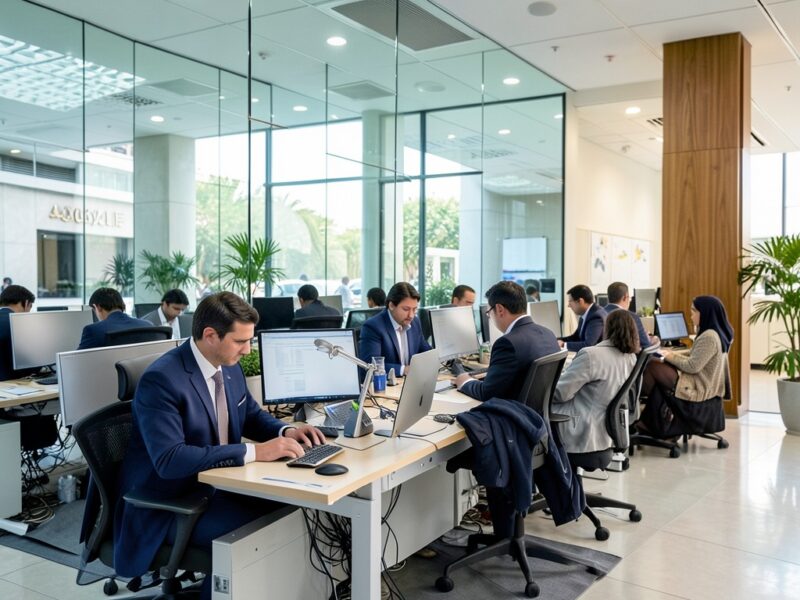
What is the Flexible Work System?
The Flexible Work System is one of the initiatives launched by the Ministry of Human Resources and Social Development in the Kingdom of Saudi Arabia, aimed at regulating the employment relationship between employers and employees in a non-traditional manner. This system allows employees to be hired on a part-time basis, remote work, or temporary work, providing greater flexibility for both parties.
The system aims to increase the participation of groups that face difficulties in committing to full-time work, such as students, female employees, people with special needs, and parents, in addition to enabling youth to gain practical experience while studying.
Key Features of Flexible Work
- Flexible working hours: Employees can choose the hours that suit their circumstances, provided they are not less than 50% of full working hours.
- Social security registration: Employees under the Flexible Work System are registered with social security, ensuring they receive their pension rights.
- Official employment contract: The relationship is documented with a clear employment contract that specifies tasks, wages, working hours, rights, and obligations.
- Multiple options: Part-time work, temporary work, remote work, and seasonal work.
Who Can Benefit?
The Flexible Work System is aimed at everyone, but it is particularly beneficial for:
- Students who wish to work while studying.
- Housewives who wish to work part-time.
- Small business owners who need employees for limited hours.
- Retirees who wish to continue working part-time.
- People with disabilities who prefer reduced working hours.
Difference Between Flexible Work and Freelancing
Many people confuse the Flexible Work System with freelancing. Here’s the difference:
- Flexible Work: A contractual relationship with a specific employer, part-time but formal, includes social security.
- Freelancing: Independent activity for one’s own account, no single employer, and requires a freelance document from the Ministry of Human Resources.
How to Apply for Flexible Work Jobs?
You can apply for flexible work opportunities through the Taqat platform (taqat.sa) affiliated with the Human Resources Development Fund. The platform offers thousands of flexible work opportunities across various sectors. All you need to do is:
- Create an account on the Taqat platform.
- Update your resume.
- Search for “part-time” or “flexible work” jobs.
- Apply directly for suitable opportunities.
Frequently Asked Questions (FAQ)
Q: Is flexible work covered by social security?
A: Yes, employees under the Flexible Work System are registered with social security, with contributions proportional to actual working hours.
Q: How many working hours are required in the Flexible Work System?
A: The minimum is 50% of full working hours (less than 20 hours per week), and it varies according to the agreement with the employer.
Q: Does a flexible work employee receive annual leave?
A: Yes, they are entitled to annual leave, but the duration is proportional to their actual working hours, as stipulated in the employment contract.
Q: Can a full-time contract be converted to flexible work?
A: This is possible by mutual agreement between the employer and the employee, and the change must be documented in a new employment contract.
Q: Does the Flexible Work System cover all sectors?
A: Most sectors are allowed, except for some professions that inherently require full-time work (such as senior supervisory positions).