Push-ups: The Ultimate No-Equipment Body Exercise
Push-ups, or “Push-ups,” are among the oldest and most popular exercises in the world. Not only are they ancient, but they are also one of the most effective exercises for strengthening the upper body. The best part? You don’t need any equipment or a gym membership—you can do them at home or even in the office.
Which Muscles Do Push-ups Work?
Push-ups are a compound exercise, meaning they target multiple muscle groups at once:
- Chest (Pectorals): The primary muscle targeted by the movement
- Shoulders (Deltoids): The front and middle deltoids work hard
- Triceps: The back of the arms—a region many people neglect
- Abs and Back (Core): Your core muscles must engage to stabilize your body
Scientifically Proven Benefits of Push-ups
1. Strengthens the Heart and Reduces Disease Risk: A famous study from Harvard University, published in 2019 in the journal JAMA Network Open, found that men who could do 40 or more push-ups had a 96% lower risk of heart disease and artery issues over 10 years compared to those who could do fewer than 10. An astonishing figure!
2. Builds Upper Body Strength: Push-ups are one of the best exercises for building muscle mass in the chest, arms, and shoulders without needing weights.
3. Improves Posture: Strengthening the shoulders, back, and core helps improve posture and prevents slouching—especially important for those who sit at a desk for long hours.
4. Burns Calories: Push-ups burn about 7-10 calories per minute, depending on your weight and intensity. If done in a circuit with other exercises, they can boost fat loss.
5. Functional Exercise: Push-ups mimic natural movements in daily life—like pushing heavy doors or getting up from the floor.
Most Popular Types of Push-ups
- Standard Push-up: Hands shoulder-width apart—the basic exercise
- Wide Push-up: Hands placed wider—focuses more on the chest
- Diamond Push-up: Hands close together in a diamond shape—targets the triceps
- Incline Push-up: Hands on an elevated surface—easier for beginners
- Decline Push-up: Feet on an elevated surface—harder and targets the upper chest
- Pike Push-up: Hips raised high—targets the shoulders
How to Start If You’re a Beginner
Can’t do a standard push-up yet? Don’t give up. Start with wall push-ups (standing and pushing against a wall), then move to knee push-ups, incline push-ups (hands on a chair or table), and finally standard push-ups. Over time and with consistency, you’ll reach standard push-ups easily.
A great starting goal: 3 sets of 5-10 reps, 3-4 times a week. Space them out in your schedule and don’t do them daily to allow your muscles time to rest and recover.
Important Tip for Proper Form
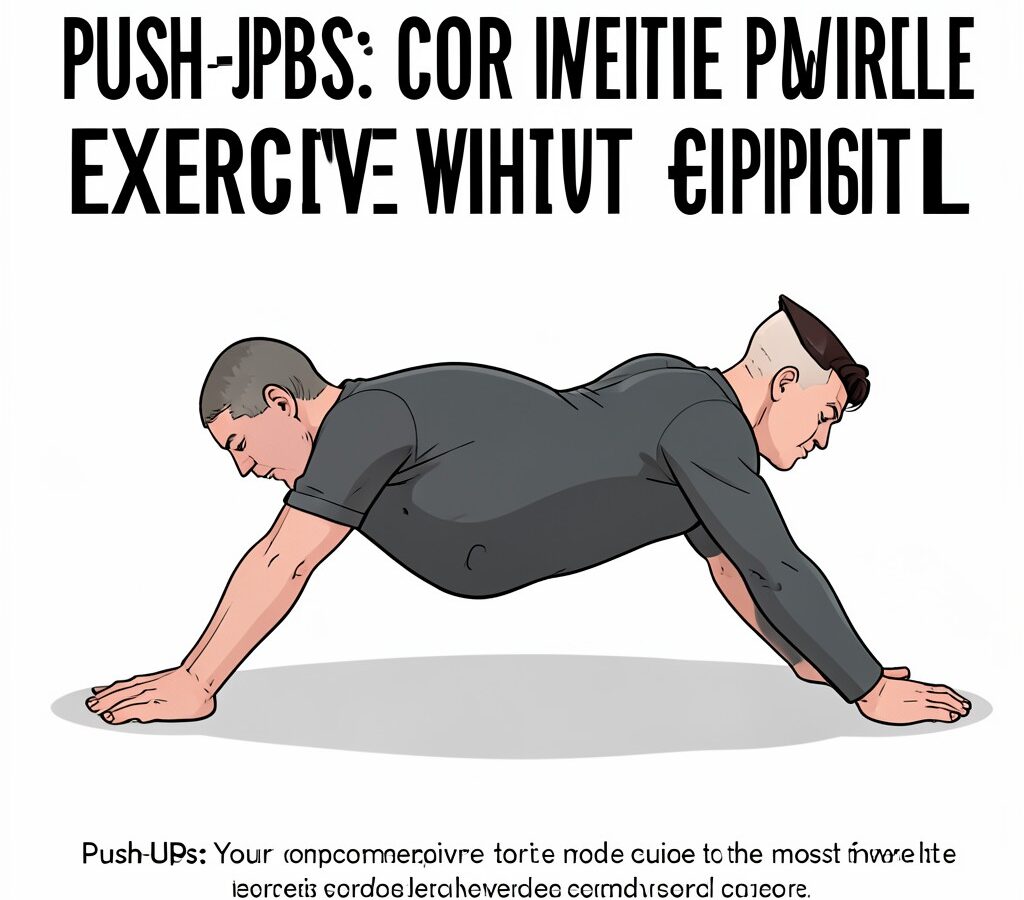
Your body should form a straight line from head to heels. Don’t raise your hips or let your stomach sag. Lower your chest close to the ground (elbows at a 90-degree angle), then push up with force. Breathing: Inhale as you lower, exhale as you push up.
Frequently Asked Questions (FAQ)
Q: How many push-ups should I do per day?
A: The number depends on your level. Beginner: 20-30 push-ups spread across sets. Intermediate: 50-100. Advanced: 100+. The most important thing is proper form.
Q: Do push-ups help with weight loss?
A: Push-ups alone aren’t enough for weight loss. However, they build muscle and increase calorie burn. The best results come with a healthy diet and cardio exercises.
Q: I feel pain in my wrists—what should I do?
A: Try doing push-ups on your fists (closed grip) or use small dumbbells you can grip. Some people use push-up handles to distribute
Press on the wrist.
Q: When will I see the results of push-up exercises?
A: With consistent practice 3-4 times a week, you will start to notice an improvement in strength within 2-3 weeks. Visible results (muscle definition) require 4-8 weeks with proper healthy eating.
Q: Are push-up exercises enough to enlarge the chest?
A: Push-ups strengthen and enlarge chest muscles as long as you increase the challenge over time. However, if you want a significantly larger chest, you need to add weights (dumbbells or barbell) along with push-ups.
In summary: Push-up exercises are one of the best fitness investments you can make. They are free, easy, effective, and can be done anywhere. Start today, even with just one push-up—the key is consistency over quantity.