AlUla Museum: Your Gateway to Ancient Arab Civilizations
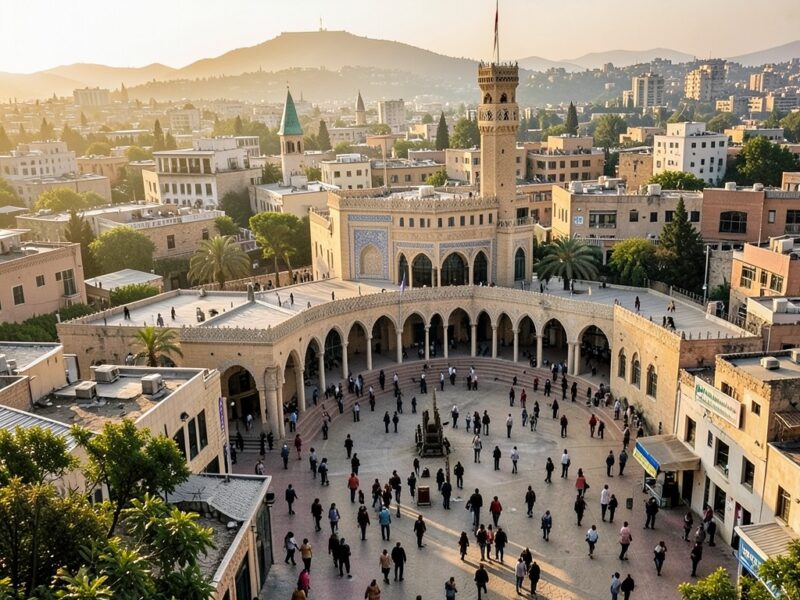
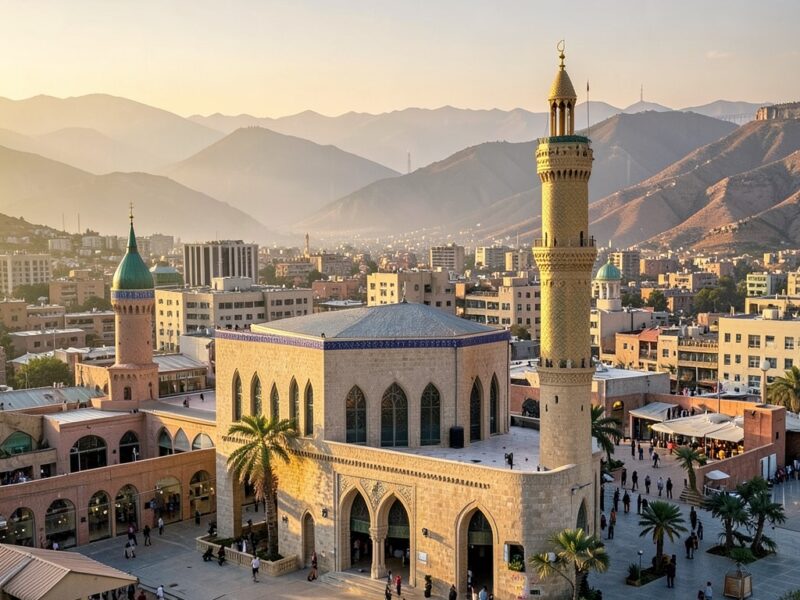
In the heart of AlUla Governorate in the Medina region, 350 kilometers northwest of Medina, stands the AlUla Museum (AlFrid Museum), a testament to the depth of human history in the Arabian Peninsula. It is not just a building displaying artifacts, but a gateway that takes you through 7,000 years of successive civilizations: Dedanite, Lihyanite, Nabataean, Islamic, and up to the Saudi state.
Strategic Location on the Incense Route
AlUla is located in a fertile valley surrounded by mountain ranges to the east and west. Its position on the ancient Incense Trade Route made it a major stop linking India and the Persian Gulf with the Levant, Egypt, and Europe. This location granted it economic and cultural wealth reflected in its diverse heritage. The museum is located at coordinates 26°36′31″N 37°55′23″E, with a total area of 10,380 square meters.
Museum History: From Concept to Reality
The museum’s idea began in 1405 AH (1985 AD), and it opened its doors to visitors in 1407 AH (1987 AD). It is affiliated with the Saudi Commission for Tourism and National Heritage (currently the Ministry of Tourism). The building includes departments, restoration and photography labs, a TV screening hall, a specialized library, researcher accommodations, warehouses, and exhibition halls.
A Journey Through Five Temporal Wings
The exhibition halls are designed to take the visitor on a sequential journey through time:
- Entrance Hall: Displays maps of AlUla’s archaeological sites, a model of the façade of Madain Saleh (Hegra), photographs, and heritage pieces.
- Prehistoric Wing: Narrates the beginning of humans, the formation of the Earth, geological layers, and the Stone Ages with their stone tools found in AlUla’s sites.
- Pre-Islamic Era Wing: From the end of the Stone Ages to the pre-Islamic period, featuring artifacts, rock inscriptions and writings, with a special focus on Hegra (Madain Saleh) and Khuraybah in AlUla.
- Islamic Period Wing: From the migration of the Prophet ﷺ to Medina, through the Rightly Guided Caliphs and successive Islamic states, displaying artifacts, rock inscriptions, and site plans such as AlMabiyat.
- Unification of the Kingdom Wing: Documents the journey of the Saudi state from its first establishment to the current prosperous era, with images, films, and heritage pieces from the AlUla region.
Museum Surroundings: An Open-Air Museum Without Walls
What makes the AlUla Museum unique is that it is not an endpoint but a starting point. Just 22 kilometers north lies Madain Saleh (Hegra), Saudi Arabia’s first UNESCO World Heritage Site (2008), with its Nabataean tombs carved into the rock, resembling Petra. In the AlUla area, you will also find:
Practical visitor information
| Visiting hours | Morning: 8:00 – 12:00 | Evening: 17:00 – 19:00 |
| Address | AlUla city, Al Madinah Region, Royal Commission for AlUla, AlUla Museum |
| Phone | 014-8841536 | Fax: 014-8840585 |
| Nearest airport | Prince Abdul Majeed bin Abdulaziz Domestic Airport (AlUla) |
Why visit the unique museum?
Because here you don’t just read history in books—you walk through its layers. Today AlUla is undergoing a qualitative leap under the vision of the Royal Commission for AlUla (established 2017), which launched AlUla Vision with a SAR 120 billion investment to transform it into a global destination for heritage, culture and nature. Visiting the museum today means you witness history being preserved and the future being built.
Frequently Asked Questions (FAQ)
- Is the museum suitable for children and families? Yes, the exhibits are designed in a simple style with models and maps that appeal to children, and AlUla’s surroundings offer a variety of family activities.
- Do I need to book in advance? Entry is usually free and walk-in during opening hours, but it is advisable to call ahead to confirm, especially during seasons and festivals (such as Winter at Tantora).
- How long does a museum visit take? Two to three hours for a comfortable tour of the five galleries.
- Are foreign-language guided tours available? Signage is bilingual (Arabic/English), and the Royal Commission provides multilingual guided tourism programs via the “Experience AlUla” app.
- What is the best time to visit? Winter season (November–March) for mild weather and coinciding festivals, though the museum is open year-round.
Source: Wikipedia (AlUla Museum, AlUla), Royal Commission for AlUla, Saudi Ministry of Tourism.