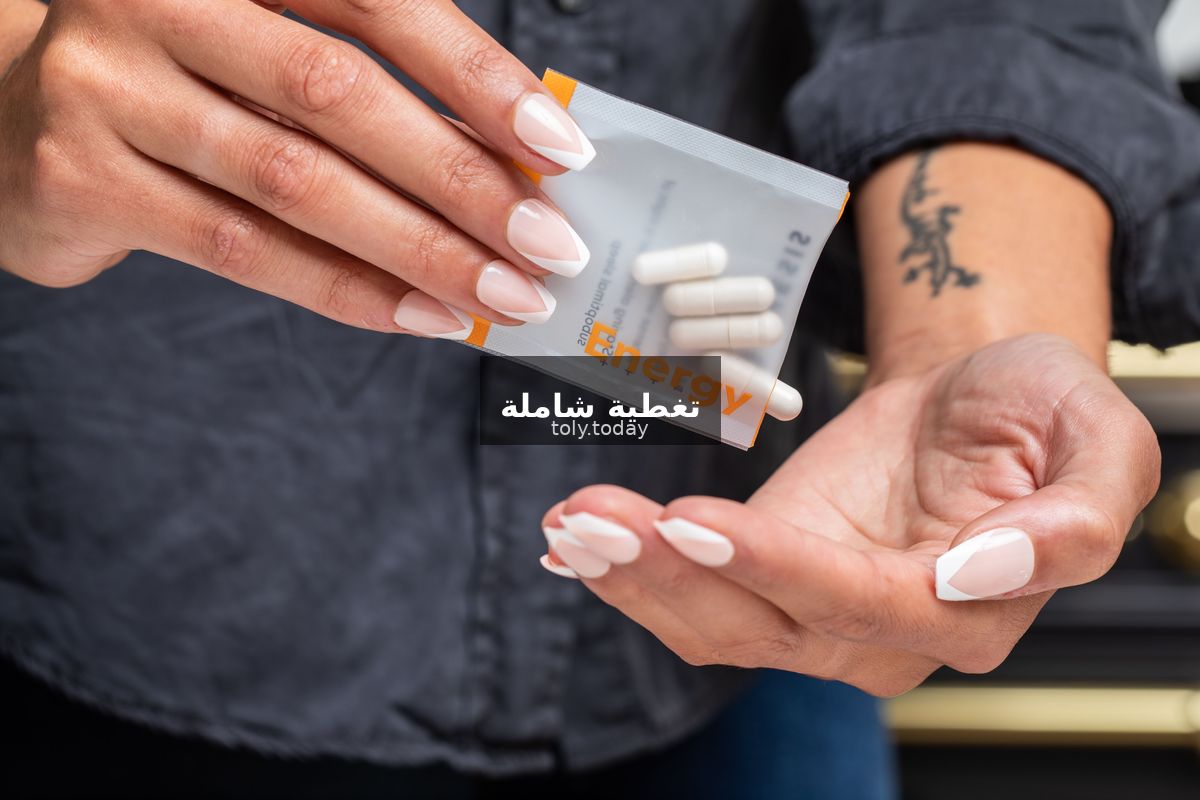
Do you feel exhausted all the time? A vitamin deficiency could be the cause
\nMany of us suffer from lethargy and persistent fatigue, and we attribute it solely to stress or lack of sleep. However, the reality is that deficiencies in certain essential vitamins and minerals could be the hidden factor behind this chronic fatigue. In this article, we review the most important vitamins that provide energy to the body, according to reliable medical sources.
\n🥇 B-Complex Vitamins – Your Body’s Power Plant
\nB vitamins are the most important when it comes to energy. According to the NHS (UK National Health Service), B vitamins help the body break down food and release energy. They include:
\n- \n
- Vitamin B1 (Thiamine): Helps the body break down food and convert it into energy, and supports the nervous system. It is found in peas, bananas, nuts, and whole wheat bread. \n
- Vitamin B2 (Riboflavin): Helps release energy from food and supports the health of the skin and eyes. It is found in milk, eggs, mushrooms, and yogurt. \n
- Vitamin B3 (Niacin): Releases energy from food and maintains the health of the nervous system and skin. It is found in meats, fish, and eggs. \n
- Vitamin B12: Essential for the formation of red blood cells and the health of the nervous system. It is found in meats, fish, eggs, and dairy products. \n
Recommended daily intakes for men: 1 mg of B1, 1.3 mg of B2, 16.5 mg of B3. For women: 0.8 mg of B1, 1.1 mg of B2, 13.2 mg of B3.
\n🩸 Iron – Oxygen = Energy
\nIron is not a vitamin, but an essential mineral for energy. As explained by the NHS, iron is important for the formation of red blood cells that carry oxygen throughout the body. An iron deficiency causes anemia, whose main symptoms are intense fatigue and weakness.
\nQuality iron sources: red meats, liver, legumes (beans, chickpeas), nuts, dried fruits (dried apricots), fortified cereals.
\nDaily intake: 8.7 mg for men and 14.8 mg for women (ages 19-49). Women are more prone to deficiencies due to menstruation.
\n🍊 Vitamin C – Absorbs Iron and Protects Cells
\nVitamin C is known for its role in immunity, but it is also important for energy. It helps absorb iron from food (especially of plant origin), which boosts energy levels. It also protects cells and maintains the health of the skin, blood vessels, and bones.
\nSources: citrus fruits, peppers, strawberries, kiwi, broccoli, potatoes. Daily intake: 40 mg per day for adults.
\n☀️ Vitamin D – For Muscle Health and Energy
\nVitamin D helps regulate calcium and phosphate in the body, which maintains the health of bones and muscles. A vitamin D deficiency is linked to bone pain, muscle weakness, and general fatigue, according to the NHS.
\nThe main source is sunlight (from April to September). It is also found in fatty fish(salmon, sardines), egg yolks, and red meats. Recommended daily intake: 10 micrograms (400 IU) per day.
\n🔋 Magnesium – the fuel of cells
\nMagnesium is an essential mineral involved in more than 300 chemical reactions in the body, including energy production. A magnesium deficiency causes muscle weakness and fatigue. It is found in nuts, seeds, leafy green vegetables, bananas, and dark chocolate.
\n💡 Practical tips to boost your energy
\n- \n
- Vary your diet: consume balanced meals containing vegetables, fruits, proteins, and whole grains. \n
- Don’t skip breakfast: start your day with a meal rich in B vitamins and iron. \n
- Add vitamin C with iron: drink a glass of orange juice with an iron-rich meal for better absorption. \n
- Get some sun exposure: 15 to 20 minutes per day is enough to stimulate vitamin D production. \n
- Consult your doctor: before taking supplements, make sure to have your vitamin levels checked. \n
❓ Frequently asked questions
\nDo energy vitamins really give me an immediate boost in energy?
\nVitamins like B12 can provide a quick energy boost if you are deficient, but their effects generally appear after a few days or weeks of regular use.
\n\n\n\nWhat is the difference between natural energy vitamins and dietary supplements?
\n\n\n\nNatural sources are preferable because the body absorbs them more effectively and they contain additional beneficial elements. Supplements are only useful in cases of confirmed deficiency.
\n\n\n\nCan I overdose on energy vitamins?
\n\n\n\nYes. Water-soluble B vitamins (B1, B2, B3, B6, B12) are excreted in urine, but very high doses can cause side effects. For example, an excess of B3 can cause skin flushing or liver damage. As for iron, high doses are dangerous and can be fatal for children.
\n\n\n\nWhat are the best vitamins for energy and fatigue?
\n\n\n\nThe B vitamin complex (especially B12) and iron are the most effective against fatigue. However, it is best to have a blood test first to identify your specific deficiency.
\n\n\n\nDoes physical exercise help with vitamin absorption?
\n\n\n\nYes, physical activity improves blood circulation, which promotes better distribution of vitamins and minerals to the body’s cells.
\n\n\n\n\n\n\n\n
Note: This article is for educational purposes only and does notlace pas une consultation médicale. Les doses mentionnées sont conformes aux recommandations du NHS (Service de Santé Britannique).
\n