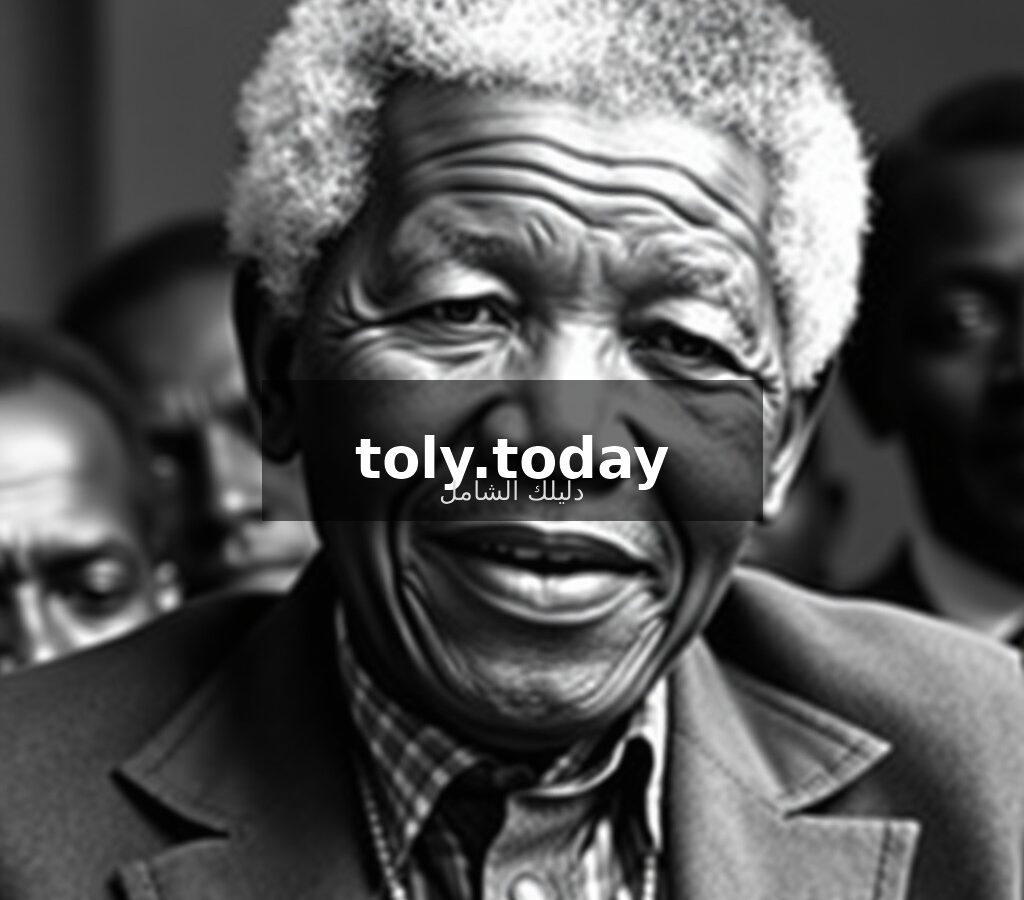
On this day in 1964, a court in South Africa delivered its historic verdict against eight of the most prominent activists in the anti-apartheid movement, including Nelson Mandela. This day marked the beginning of a 27-year prison sentence that ultimately forged a freedom legend that changed the face of the entire African continent.
The Rivonia Trial: A Pivotal Moment in History
The so-called Rivonia Trial began on October 9, 1963, following a security raid on a farm in Liliesleaf, Rivonia, a suburb near Johannesburg. The site was a secret meeting place for the Brave Fighters (uMkhonto we Sizwe), the newly established armed wing of the African National Congress (ANC).
The list of defendants included prominent names: Nelson Mandela, Walter Sisulu, Govan Mbeki, Ahmed Kathrada, Denis Goldberg, Raymond Mhlaba, Elias Motsoaledi, and Andrew Mlangeni. They all stood before Judge Quartus de Wet in the Pretoria Palace of Justice, charged with conspiracy and sabotage to overthrow the apartheid regime.
Mandela’s Speech: “I Am Prepared to Die”
On April 20, 1964, Mandela delivered a historic three-hour speech from the dock. In it, he defended the ANC’s decision to shift from nonviolent resistance to armed struggle against apartheid, explaining that the regime had closed all political avenues for Black South Africans.
Mandela concluded his remarks with words that later became a global slogan: “During my lifetime, I have dedicated myself to this struggle. I have fought against white domination, and I have fought against Black domination. I have cherished the ideal of a democratic and free society in which all persons live together in harmony and with equal opportunities. It is an ideal which I hope to live for and to achieve. But if needs be, it is an ideal for which I am prepared to die.”
The Verdict: Life Imprisonment
After nine months of trial, on June 12, 1964, Judge Quartus de Wet delivered his verdict. Eight of the defendants were sentenced to life imprisonment, while Lionel Bernstein was acquitted due to insufficient evidence against him.
Mandela and his comrades were sent to Robben Island, where they endured harsh conditions for many years. Yet the trial did not weaken their resolve; instead, it transformed the defendants into global symbols of the struggle for freedom and justice.
From Prison to the Presidency
After 27 years in prison, Nelson Mandela was released on February 11, 1990, by order of President Frederik Willem de Klerk. Just a few years later, in 1994, Mandela became South Africa’s first Black president in the country’s first multiracial democratic election.
The Rivonia Trial was not an end, but a beginning—a journey that turned Mandela from a freedom fighter into a global icon. Today, June 12 is remembered each year as the anniversary of a moment that made Mandela’s words “I am prepared to die” a rallying cry for all who fight for freedom and human dignity.