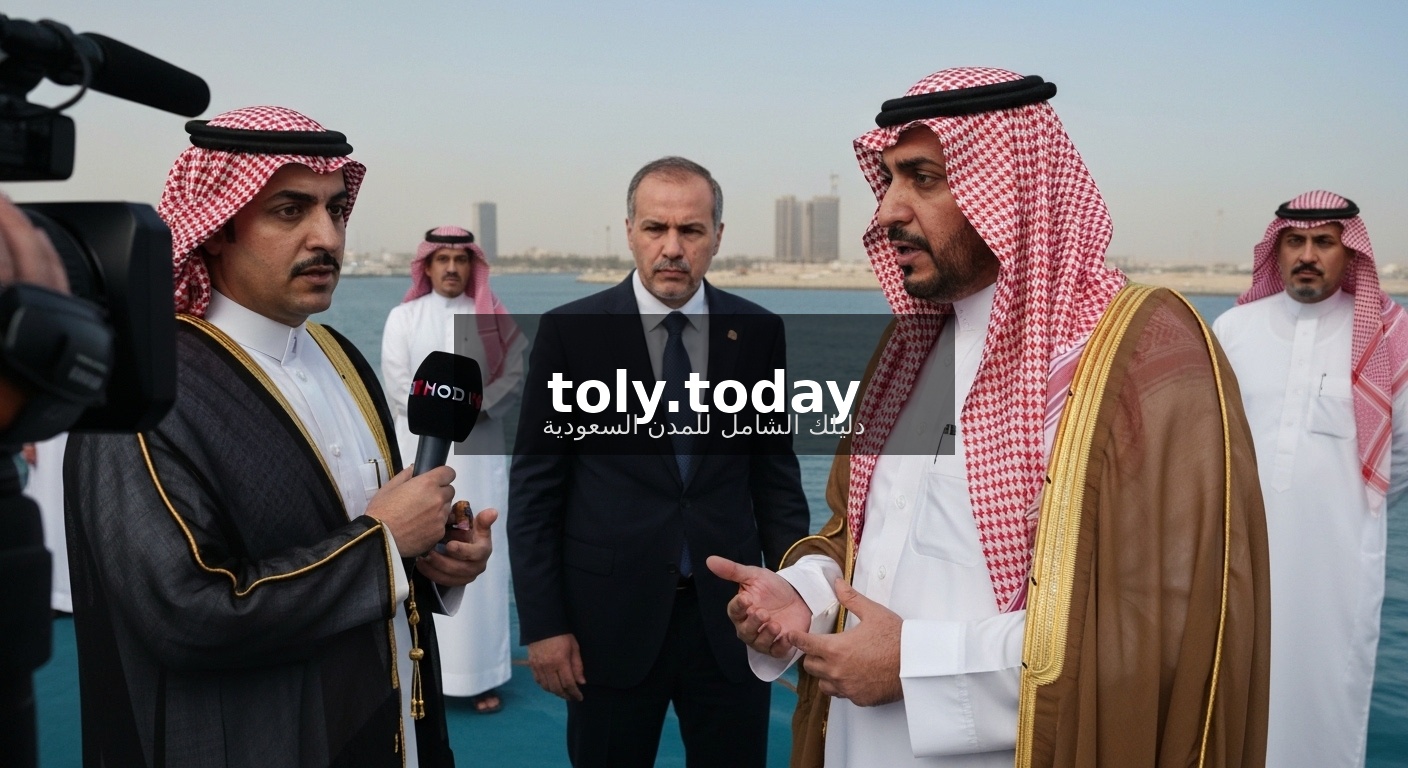
U.S. President Donald Trump announced today, Sunday, that a memorandum of understanding for a peace agreement between the United States and Iran “has been heavily negotiated,” amid expectations of reopening the vital Strait of Hormuz to maritime traffic—a direct and significant development for Saudi Arabia and Gulf countries.
Agreement Involving Saudi Arabia and Gulf Countries
Trump said on his platform “Truth Social” that the agreement was reached between America and Iran and “various other countries,” with sources mentioning that among these countries are: Saudi Arabia, the UAE, Qatar, Pakistan, Turkey, Egypt, Jordan, and Bahrain. He confirmed that the talks also included contact with Israeli Prime Minister Benjamin Netanyahu.
The proposed agreement includes reopening the Strait of Hormuz, which Iran closed since the outbreak of war with America and Israel on February 28. This closure caused a global energy crisis, significantly increased shipping costs, and directly affected Saudi and Gulf oil exports.
Initial Terms of the Agreement
According to sources, the proposed framework includes several stages:
- First phase — Officially ending the war and lifting the naval blockade on Iranian ports within 30 days.
- Second phase — Fully reopening the Strait of Hormuz with no fees imposed on passing ships.
- Third phase — A 60-day negotiation window to reach a broader agreement on Iran’s nuclear program.
- Lifting some sanctions on Iranian oil during the negotiation period.
- An Iranian commitment not to seek nuclear weapons in exchange for easing sanctions.
Iran’s Reaction and Doubts About Details
Meanwhile, official Iranian sources downplayed some of Trump’s statements. Iranian Foreign Ministry spokesman Ismail Bakhshahi described what happened as a “move toward rapprochement” but said it “does not necessarily mean reaching an agreement on important issues.” The Iranian Tasnim news agency confirmed that the lifting of the naval blockade must be complete within 30 days and that Iran has not yet accepted any measures related to its nuclear program.
For his part, Pakistani Foreign Minister Ishaq Dar said that “significant progress” has been made and that the next round of negotiations between America and Iran will be “very soon.”
Direct Impact on Saudi Arabia
Reopening the Strait of Hormuz means the return of Saudi and Gulf oil flows to global markets without obstacles, which will ease pressure on energy prices and strengthen economic stability in the Kingdom. Additionally, the success of the mediation enhances Saudi Arabia’s regional position as a key player in the diplomatic landscape of the region.
Sources: Saudi Press Agency (SPA), Tasnim News Agency, Al Jazeera, Reuters.