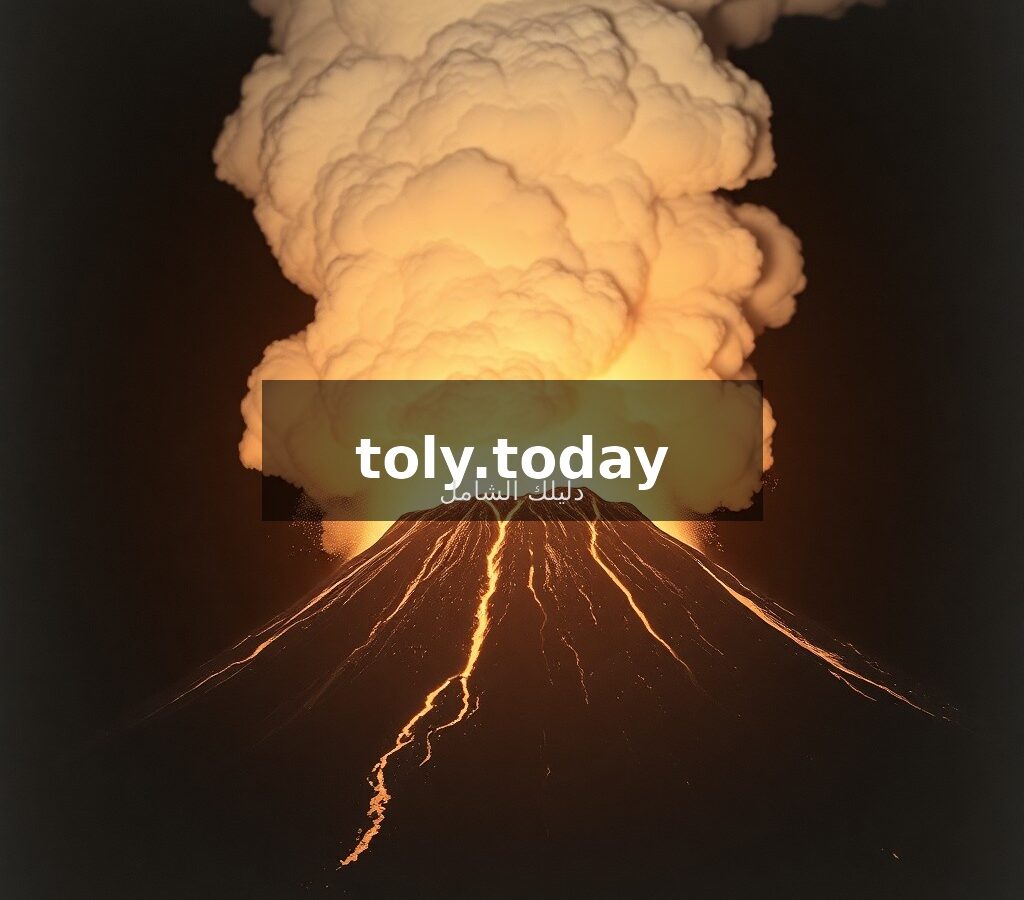
On June 6, 1912, away from the eyes of the global press, a natural disaster occurred that changed the geography of the Earth. That night, the Novarupta volcano in Alaska erupted, considered the most powerful volcanic eruption of the entire 20th century.
How Did the Disaster Begin?
The first spark came in the early hours of June 6, when residents of the region from the Katmai and Alutiiq tribes heard a massive rumbling resembling repeated earthquakes. Despite its geographical isolation, the force of the volcanic eruption was felt by people thousands of kilometers away. Alaska was not only close to the fiery columns but also faced a thick fall of scorching volcanic ash.
Within just a few hours, the volcano spewed out 30 cubic kilometers of volcanic material, a volume far greater than the famous 1980 eruption of Mount St. Helens. The amount of ash and dust ejected from Novarupta’s crater was thirty times greater than any other American volcanic eruption in the 20th century.
Why Was the Novarupta Eruption Exceptional?
What made this eruption extraordinary was not just its size but also the speed and force of its explosion. Within hours, ash plumes reached heights exceeding 30 kilometers into the sky, forming a massive cloud that blocked sunlight from the region for days. Volcanic ash covered a vast area, extending beyond Alaska into Canada’s Yukon Territory and reaching as far as Oregon and Washington.
The eruption also created a valley of volcanic deposits unlike anything seen before in natural history, drastically altering the region’s landscape. Today, this valley is part of the Katmai National Park and Preserve, attracting scientists and researchers from around the world.
Global and Scientific Impact
Despite the real destruction left by the Novarupta eruption, it provided geologists and volcanologists with a unique opportunity to study the largest natural explosion of the 20th century. By analyzing the aftermath, researchers gained insights into how volcanoes affect global climate and how weather patterns change after such disasters.
Today, the Novarupta area has become an open-air natural museum, where scientists study how the Earth’s crust interacts with internal pressure and what warning signs can help predict future volcanic eruptions.
Lessons from History
The Novarupta eruption serves as a reminder of nature’s unpredictable power. Often, we ignore distant natural disasters until we realize they can impact global climate and ecosystems for years. History is not just a record of the past but a lesson in how humanity interacts with our planet.
In today’s world, as concerns about climate change and environmental disasters grow louder, Novarupta reminds us that the Earth holds immense forces within its depths—and that awareness and scientific research are our most important tools for facing these forces.