In an unprecedented move globally, the Kingdom of Saudi Arabia has launched a comprehensive national curriculum to teach Artificial Intelligence in all public schools. More than 6 million students have begun this academic year 2025-2026 learning Artificial Intelligence, from elementary to secondary school. This ambitious initiative puts Saudi Arabia at the forefront of countries investing in the digital future of generations.
What is the Saudi Artificial Intelligence Curriculum?
The new curriculum is not just an additional subject to the school schedule. It is a comprehensive educational framework developed by the Data and Artificial Intelligence Authority (SDAIA) in collaboration with the Ministry of Education, the Ministry of Communications and Information Technology, and the National Center for Curriculum. The curriculum is specifically designed for the Saudi context, not just a translation of Western curricula. It includes Arabic content, local case studies, and practical projects related to the reality of the Kingdom.
Content by Educational Stage
SDAIA has divided the curriculum into three main stages, each focusing on skills suitable for the student’s age:
- Primary Stage (Grades 1-6): Computational thinking, basic data analysis, and an introduction to machine learning. The goal is to build scientific curiosity in the child towards technology.
- Middle Stage (Grades 7-9): Machine learning concepts, algorithmic thinking, and Artificial Intelligence ethics. The student begins to understand how smart applications work around them.
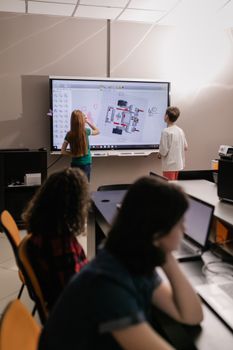
- Secondary Stage (Grades 10-12): Practical Artificial Intelligence projects, solving real-world problems, and studying the impact of technology on Saudi society.
Why Saudi Arabia? The Larger Context
This initiative is not isolated. It is part of a broader strategy within Saudi Vision 2030. The Kingdom declared 2026 the “Year of Artificial Intelligence” and invested more than $91 billion in advanced technologies and the digital economy. Mega-projects like NEOM, Qiddiya, and Diriyah all rely on Artificial Intelligence and digital twinning.
Graduating generations educated in Artificial Intelligence is not an educational luxury — it is an economic necessity. Saudi Arabia is building a knowledge economy and needs citizens who can work in future jobs that have not been created yet.
Important Points About the Curriculum
- Phased Implementation: The curriculum started in public schools first in major cities, to later expand to include all regions
- Arabic Content: All materials and
- Curriculum designed in Arabic, with interactive digital resources
- Teacher Training: Sadaaya and the Ministry of Education have launched intensive training programs for teachers on the latest artificial intelligence technologies
- Project-Based Learning: The curriculum is based on applied learning, not theoretical memorization
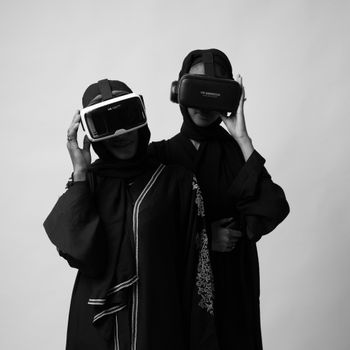
- “Retaq” Program: An initiative to train 25,000 women in artificial intelligence and data fields over 5 years
❓ Frequently Asked Questions
Who needs this curriculum?
The curriculum is directed at all students in public schools in Saudi Arabia, from first grade elementary to third grade secondary. Private and international schools wishing to align their curricula with national trends also benefit from it.
Where is the curriculum applied?
In all public schools affiliated with the Ministry of Education in the Kingdom of Saudi Arabia, starting from major cities (Riyadh, Jeddah, Dammam) to all regions.
What is the cost of the curriculum for the student?
The curriculum is completely free for public school students. The state bears the costs of development, training, and educational resources within the national education budget.
How long does it take to teach the curriculum?
The curriculum spans 12 full academic years, from elementary to secondary. Each stage takes 3 academic years with a set number of weekly classes according to each grade.
How do I start learning artificial intelligence?
For school students: The curriculum is taught within the official school schedule. For those outside of school: You can visit the “Future Skills” platform affiliated with Sadaaya, which provides free artificial intelligence courses for beginners.