
Computing Revolution without Screens: From Apple to Snap, How Technology is Changing the Way We Interact with Devices

Imagine walking down the street, opening your fridge at home, or browsing cooking recipes… all without looking at your phone’s screen. This may seem like science fiction, but it’s a reality that the world’s top tech companies are approaching today. From Apple to Snap to Meta, everyone is racing towards a new era of “Ambient Computing” or “Surround Computing” that eliminates traditional screens.
🤔 What does “screenless computing” mean?
Simply put: instead of holding your phone and staring at the blue screen for hours, new devices will be smarter and interact with you through your voice, hand movements, and even your surroundings. The new technology uses artificial intelligence to understand your environment and serve you without needing to touch anything.
For example, Apple is reportedly working on AirPods with tiny cameras that will be integrated into the earbuds. These cameras are not for taking videos, but to feed the Siri virtual assistant with information about your surroundings. This means you can ask Siri “what’s that plant?” and it will look in front of you and answer directly.
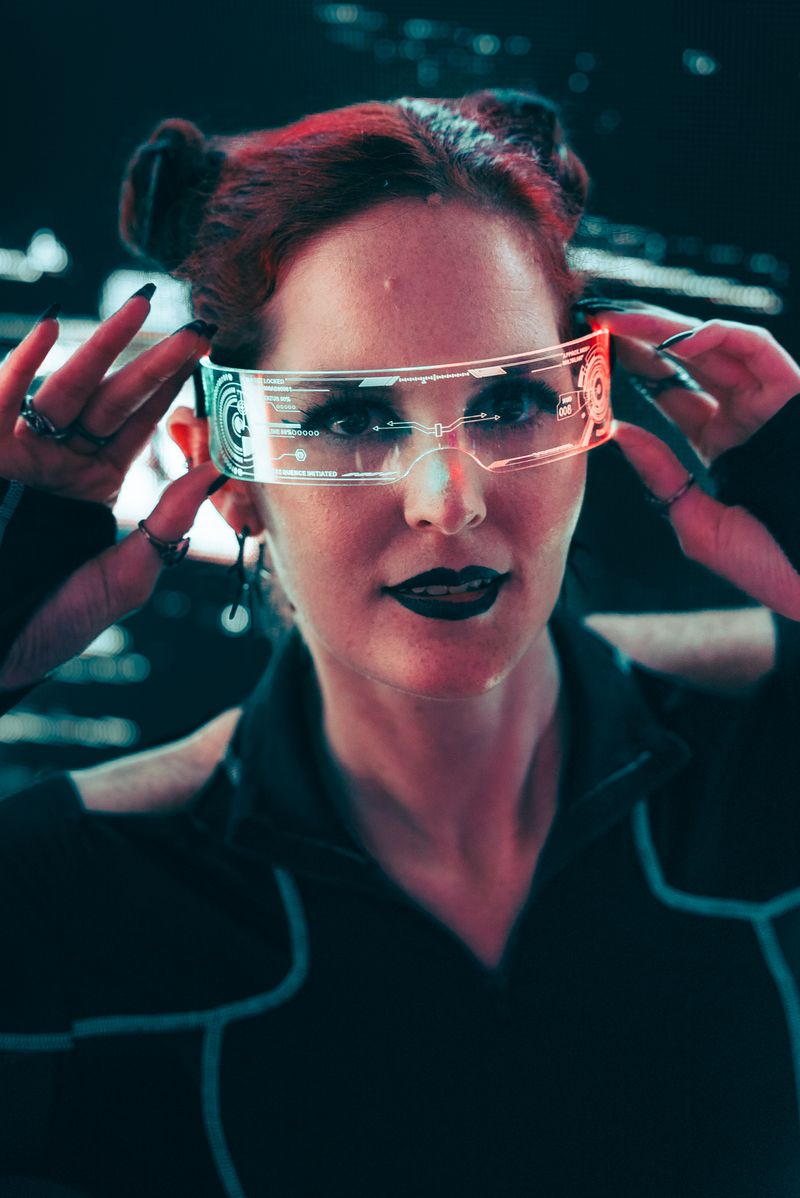
In the same direction, Snap (the owner of Snapchat) launched Specs smart glasses for $1,995, which can be used without connecting them to your phone. And Meta (Facebook) has sold more than 7 million smart glasses worldwide and is preparing to launch new, cheaper models.
🇸🇦 What’s Saudi Arabia’s connection to this topic?
Saudi Arabia is not far from this technological wave at all. With Vision 2030 and the digital transformation, the Kingdom is heavily investing in smart cities like NEOM and The Line, and these massive projects will be among the first to adopt these new technologies.
Imagine in NEOM: you walk down the street and your smart glasses show you directions, or translate signs for you in Arabic and English without stopping. Or at home, you ask the new Siri “how much time is left until Maghrib prayer?” and it looks at your location from the camera and answers you.
Saudis are among the most tech-savvy populations (smartphone penetration has exceeded 96%), and interest in artificial intelligence and innovation is at an all-time high thanks to the 2026 Year of Artificial Intelligence launched by SDAIA.
📌 Key points about screenless computing
- Privacy first: New technologies raise privacy concerns – smart glasses have cameras that can capture others without their knowledge. But Apple plans to process all data on the device itself without sending it to the cloud.
- Artificial intelligence is the key: The new technology relies entirely on artificial intelligence. The smarter AI becomes, the better screenless devices will be.
- Not everything is rosy: Some analysts warn that screenless technology won’t reduce our use of technology, but rather make us use it more!
- Prices are still high: Snap’s smart glasses cost $2,000, which is a big number. But over time and with wider markets, prices will decrease, just like smartwatches did.
- The market is growing: The market for smart glasses and wearable devices is growing rapidly, and we expect to see more products in 2027.
❓ Frequently asked questions about screenless computing
Who needs screenless devices?
Everyone can benefit! But in particular, people with busy lifestyles or those who want to reduce their screen time can greatly benefit from these devices.
Specifically: athletes who want to track their performance without a phone, drivers who need directions without taking their eyes off the road, and restaurant and store owners who want better service for customers.
Where is this technology used?
Everywhere: smart homes, offices, hospitals, factories, and even in education. Saudi Arabia in particular may see it in NEOM projects, smart cities, and the Riyadh Metro.
How much do these devices cost?
Currently, Snap Specs glasses cost $1,995 (around 7,500 SAR). Meta Ray-Ban smart glasses are about $299 (1,120 SAR). The new AirPods are expected to be in the range of $250–350 (940–1,300 SAR). But prices will drop over time.
When will new devices hit the market?
Snap Specs glasses will launch in late 2026. AirPods with cameras are expected in 2027. Meta plans cheaper new glasses by late 2026. Apple smart glasses are expected between 2027 and 2028, according to Bloomberg reports.
How do I start using this new technology?
You can start now! Try Meta Ray-Ban smart glasses (available now) or simply use Siri or Google Assistant more often to get used to voice interaction. The future is near—no need to wait long!

💭 Summary
Screenless computing isn’t just a trend—it’s a real revolution in how we interact with technology. From AirPods that let you see your surroundings to smart glasses that replace your phone, this new tech will change our daily lives. And with Saudi Arabia’s ambitious projects, it will be among the first countries to adopt these innovations. Get ready for a new world where you never have to touch a screen again! 👓✨