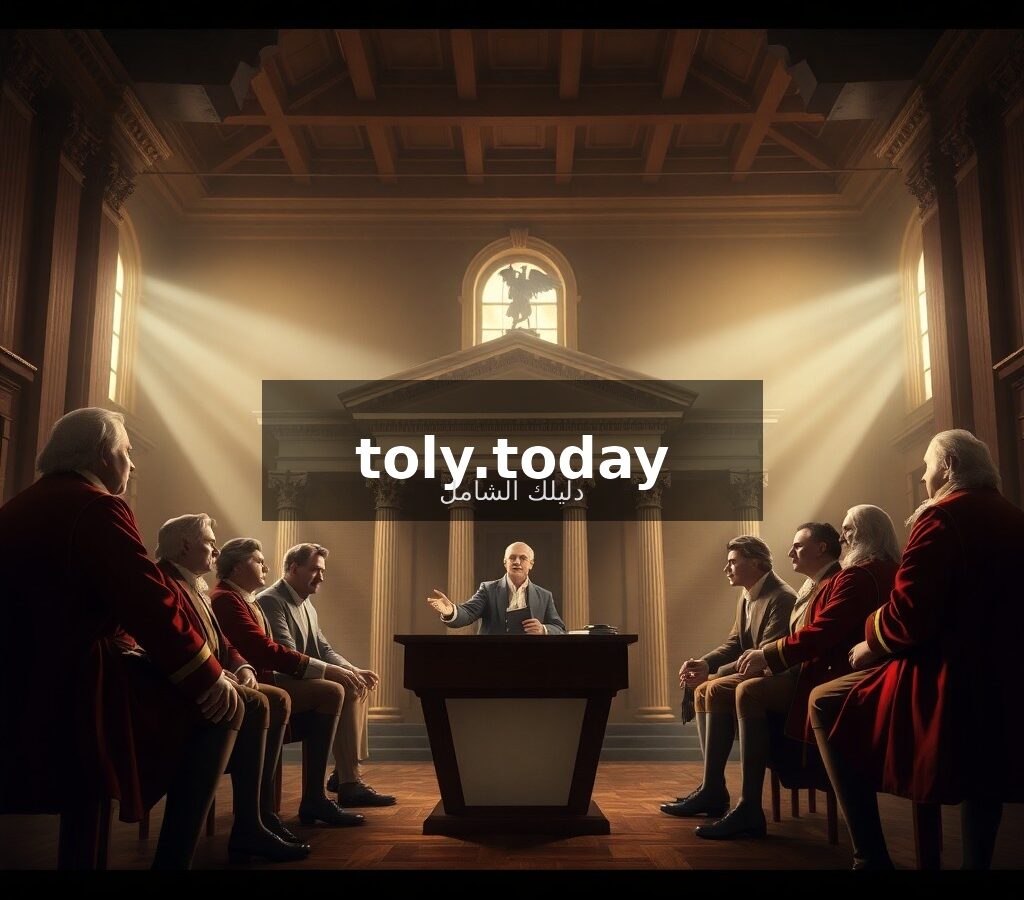
On June 11, 1776, five men made their way to a small room in Philadelphia, and no one at the time knew that their pens would write one of the most important documents in human history. The Second Continental Congress faced a fateful moment: either continue negotiating with Britain or take an irreversible step toward complete independence.
Five Unknown Heroes
On that day, Congress decided to form a committee of five to draft a document explaining to the world why the thirteen colonies were separating from the British Crown. The committee included:
- Thomas Jefferson — representative of Virginia, the talented young man known for his elegant literary style, who later became the third President of the United States.
- John Adams — representative of Massachusetts, the fierce lawyer and skilled negotiator who became the second President.
- Benjamin Franklin — representative of Pennsylvania, the scientist, diplomat, and inventor with multiple achievements.
- Robert Livingston — representative of New York, the wealthy nobleman who later became responsible for managing the commercial department.
- Roger Sherman — representative of Connecticut, the simple judge who worked as a tailor before becoming a politician.
The Young Doctor and the First Draft
The process began with the others telling Jefferson that he was the “youngest” and had the “best pen.” Jefferson humbly accepted and spent weeks working on a draft that included the reasons for separation and the values of freedom and equality. The 33-year-old young man was fully aware that his words could either establish or destroy an American renaissance.
After completing the draft, the committee reviewed and revised it. Congress removed some controversial paragraphs, including the sentence condemning the slave trade—a decision the country would later regret decades after the Civil War.
From June 11 to July 4
The committee presented its draft on June 28, but discussions continued until July 4, 1776, when Congress unanimously voted in favor of the Declaration of Independence. This date became one celebrated by Americans as their Independence Day, though few know that the true beginning was on June 11 in that small room.
Jefferson’s document was not merely a political declaration—it was a profound philosophical statement on human rights. It began with the words: “We hold these truths to be self-evident, that all men are created equal, that they are endowed by their Creator with certain unalienable Rights, that among these are Life, Liberty and the pursuit of Happiness.”
A Legacy That Spans History
The American Declaration of Independence influenced not only countries like France and those in Latin America but also became a model for anti-colonial revolutions worldwide. Although July 4 is the day Americans celebrate, June 11 is the day that marked the drafting of those dreams—at the heart of the idea that freedom is worth writing and living.