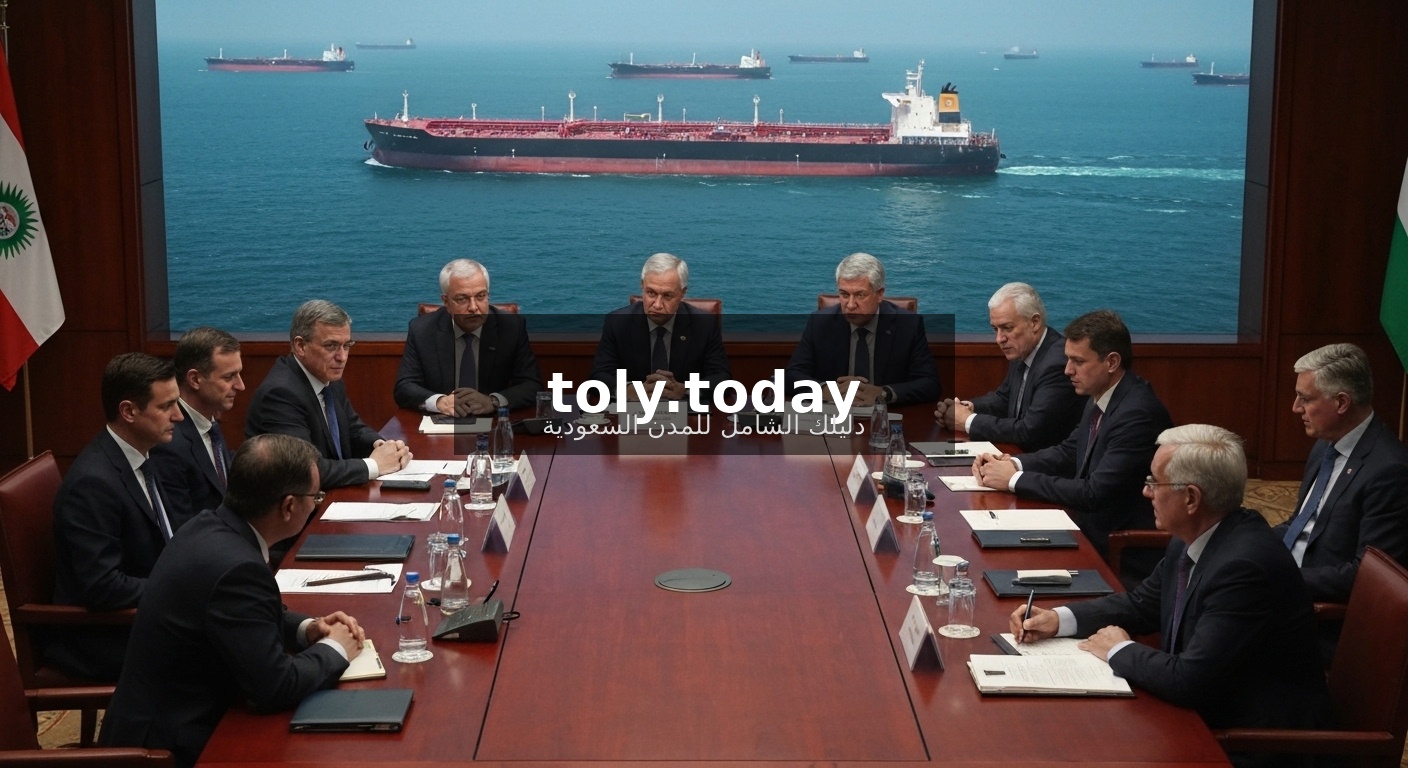
In a major diplomatic development, American and Iranian sources revealed that Washington and Tehran are close to signing a preliminary agreement to end the war in the Middle East, including the reopening of the Strait of Hormuz — the most important waterway for Saudi and Gulf oil exports.
📰 Full Details
President Donald Trump said in a post on social media on Sunday that negotiations with Iran are “proceeding in an orderly and constructive manner,” and indicated that the preliminary agreement between the two countries has been “heavily negotiated.” He confirmed that the naval blockade on Iran will remain in effect until the final signing.
An American official told reporters that Washington and Tehran have agreed in principle to reopen the Strait of Hormuz in exchange for an Iranian commitment to eliminate its stockpile of highly enriched uranium. However, no signature has been made yet, and the agreement requires final approval from Trump and Iranian Supreme Leader Ali Khamenei — which could take days.
🇸🇦 What Does This Mean for Saudi Arabia?
The reopening of the Strait of Hormuz is great news for Saudi Arabia and the Gulf countries. The strait carries about 20% of global oil supplies, and Iran had imposed an effective blockade on it during the war that began in February, causing global energy prices to rise.
With the reopening of the strait, the following is expected:
- Lower oil prices — meaning lower fuel and electricity bills
- Stable supplies — Saudi and Gulf oil exports will return to normal
- Reduced shipping and insurance costs — and lower prices for imported goods
- Return of investments — foreign investors will return to a more stable region
⚡ Disagreements in the Details
Despite the optimism, there is still a significant gap between the American and Iranian narratives:
American officials say the agreement includes a commitment from Iran to completely eliminate its enriched uranium. Meanwhile, Iranian officials say the memorandum of understanding only states that the nuclear file will be subject to negotiation within 30 to 60 days.
The agreement does not currently include Iran’s missile arsenal or the suspension of enrichment — these issues will be deferred to future negotiations.
🔮 What’s Next?
Israeli Prime Minister Benjamin Netanyahu issued an official statement confirming that any agreement must require Iran to dismantle its nuclear sites and remove its enriched uranium. In Washington, the agreement faced sharp criticism from Republican hawks in Congress, who described it as a “disaster.”
Saudi Arabia, which has not issued an official statement yet, is considered one of the biggest beneficiaries of any agreement that restores stability to the region and reopens the Strait of Hormuz. Diplomatic sources indicate that Riyadh quietly supports the diplomatic efforts behind the scenes.
⏳ Developments are accelerating — follow toly.today for any updates.