On May 26, 1908, in a remote spot in southwestern Persia (now Iran), an event occurred that would change the face of the Middle East and the entire world. After seven years of drilling, excavation, and hardship, oil gushed from the Masjed Soleyman well, marking the first major commercial oil discovery in the Middle East. This event not only placed the region on the global energy map but also laid the foundation for an industry that would determine the fate of nations and shape power dynamics for decades to come.
Who it concerns: History, economics, and energy enthusiasts
Where it takes place: Masjed Soleyman — Khuzestan Province (southwestern Iran)
How much it costs: The total cost of drilling amounted to £600,000
When: May 26, 1908 — the first commercial oil gush in the Middle East
⚠️ Fact: This well (known as “Masjed Soleyman Well No. 1”) produced nearly 250,000 barrels annually in its early years
The Oil Story: From Chance to the Greatest Project
In the late 19th century, the British Royal Navy was undergoing a major strategic shift — transitioning from coal to oil as its primary energy source. This urgent need drove the British government to seek guaranteed oil sources outside its borders. Persia — a politically weak country with rugged terrain — became the target.
In 1900, reports reached London indicating signs of oil in southwestern Persia. The British government chose one man to execute the mission: William Knox D’Arcy, a wealthy British millionaire of Australian descent who was seeking new investments after his success in gold mines.
The Historic D’Arcy Agreement — May 28, 1901
After negotiations with Muzaffar al-Din Shah Qajar, an exceptional 18-article agreement was signed on May 28, 1901. Under this agreement, D’Arcy obtained exclusive rights to explore, extract, transport, and sell oil and gas across all of Persia for 60 years, excluding five northern provinces. The concession area covered approximately 1.2 million square kilometers — three-quarters of Iran’s territory!
In return, D’Arcy paid £20,000 upfront and promised to share 16% of the profits with the Persian government. This lopsided contract would later become one of the causes of public resentment that led to the nationalization of Iranian oil in 1951.
The Man Who Dug in the Desert — George Reynolds
D’Arcy sent a tough British drilling engineer named George B. Reynolds to lead the drilling operation. Reynolds and his team faced unbearable conditions: scorching heat, disease, supply shortages, and constant monitoring by suspicious local tribes.
The team began drilling at a site called “Chiah Surkh” near the current Iraqi border. In 1904, they found oil in limited quantities — not yet commercially viable. D’Arcy had already spent £160,000 and was indebted to the bank by an additional £177,000. The mission was on the verge of collapse.
The Decisive Moment
Had it not been for the intervention of the British Admiralty (the Royal Navy), which convinced the Burmah Oil Company to financially support D’Arcy, the story would have ended there. In 1905, the “Concession Syndicate” was formed, and it was decided to move drilling operations to a new site — Masjed Soleyman (Masjid
The site is located in the province of Khuzestan. The site was named after an old mosque in the area attributed to the Prophet Solomon.
May 26, 1908 — The Day of the Great Rush
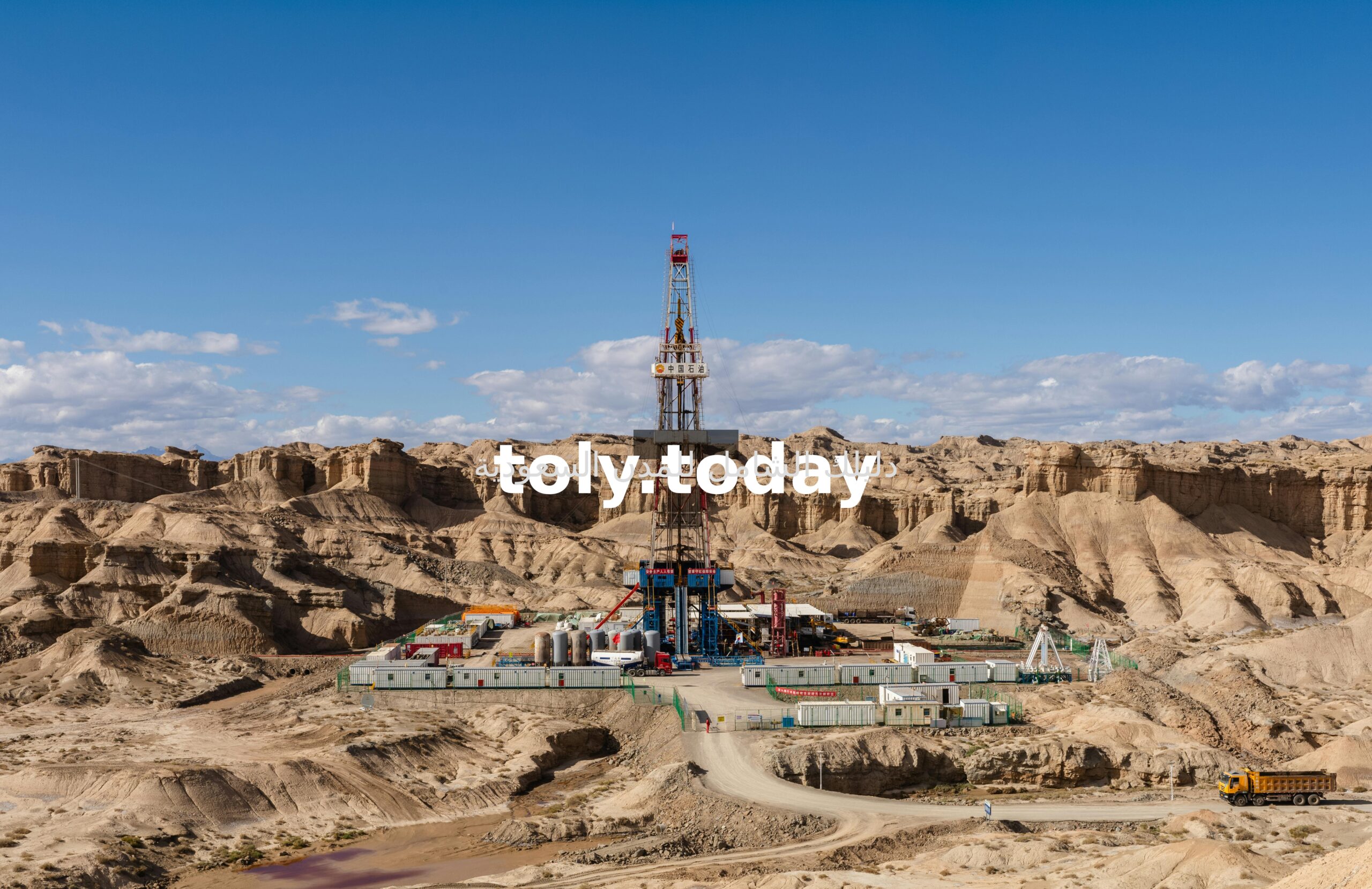
After more than a year of drilling in Masjed Suleiman, Reynolds and his team reached a depth of 360 meters below the surface of the earth. On May 26, 1908, at 4:00 am, what they were waiting for happened — a huge pressure pushed the crude oil with force from the Masjed Suleiman well No. 1, and a 15-meter-high fountain erupted into the air.
“At 4:00 am on May 26, oil exploded from a depth of 360 meters. We couldn’t stop the flow for three days. The earth shook as if an earthquake had struck the place.”
— From the report of the drilling team in Masjed Suleiman
The news reached London after a few days via the telegraph. The prices of D’Arcy’s shares rose immediately. The world was on the verge of entering a new era.
Basic Information About the Well and Discovery
| Information | Details |
|---|---|
| Date | May 26, 1908 |
| Location | Masjed Suleiman — Khuzestan (southwest Iran) |
| Well Depth | 360 meters (1,180 feet) |
| Discoverer | George Reynolds with funding from William D’Arcy |
| Initial Production Quantity | Approximately 250,000 barrels per year |
| Resulting Company | Anglo-Persian Oil Company (later BP) |
| Concession Value | 60 years on 1.2 million square kilometers |
Results That Changed the World
This discovery was not just an oil well — it was a spark that ignited a series of events that changed the region and the world:
- Establishment of the Anglo-Persian Oil Company (1909): A year after the discovery, APOC was established, which would later become British Petroleum (BP) — one of the largest energy companies in the world.
- Transformation of the British Fleet: Before World War I, Minister of the Navy Winston Churchill bought 51% of the company’s shares to ensure oil supplies for the Royal Navy.
- Beginning of the Oil Era in the Middle East: This discovery paved the way for massive discoveries in Iraq (1927), Bahrain (1932), Saudi Arabia (1938), Kuwait (1938), and the UAE (1958).
- Redrawing of the Political Geography: Oil turned the region from a strategic crossing to a global economic hub, changing the balance of international power.
- Economic and Social Change: Transformed Gulf countries from poor communities dependent on pearl fishing and trade to global economic powers.
Frequently Asked Questions
How long did it take to reach the oil?
Seven full years of continuous drilling (1901-1908) with attempts at several different sites, and enormous expenses that nearly bankrupted D’Arcy.
Where is Masjed Suleiman located?
In the province of Khuzestan, southwest Iran, about 350 kilometers northwest of the port of Bandar Abbas.
What remains of the historic well?
The well
No. 1 is still present today as a historical site in the city of Masjed Soleyman. The area is still producing oil, despite the decline in its production compared to the first decades.
Was this the first oil discovery in the world?
No. The first oil well in the world was in Baku (Azerbaijan) in 1846, and the first successful commercial well in the United States was in Pennsylvania in 1859. However, this well was the first — and most important — in the Middle East.
Sources: Wikipedia — Masjed Soleyman, D’Arcy Concession, Anglo-Persian Oil Company